A Trustworthy PCB and Electronic Manufacturing Enterprise! Contact Us



1. Definition and Core Functions of Solder Mask
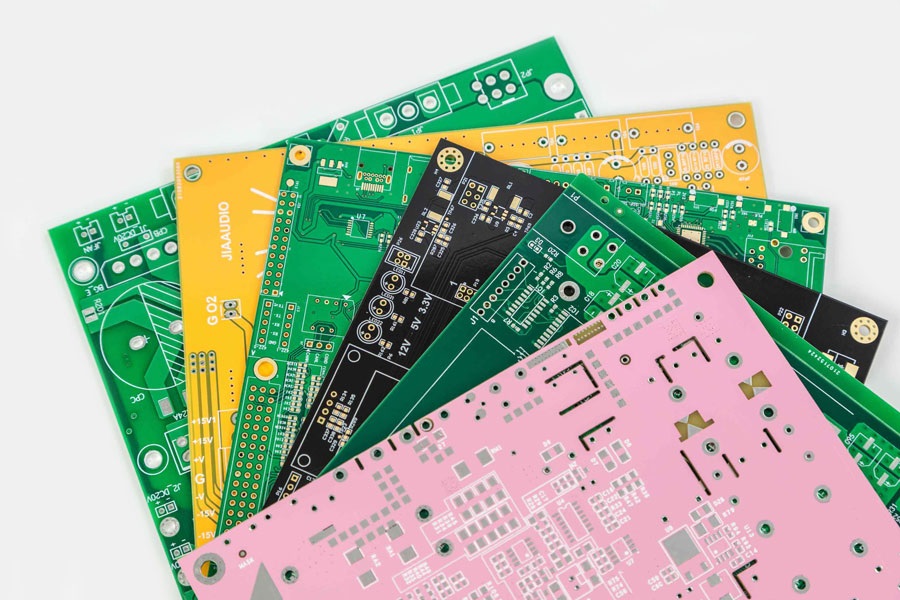
The solder mask is an insulating coating applied on the outer copper layers of a PCB. Its role goes far beyond “cosmetic” or simple “protection”—in high-density and high-reliability PCBs, it is a critical process layer that directly affects soldering quality and long-term reliability.
From an engineering perspective, solder mask serves four core functions:
Preventing Solder Shorts
During SMT or THT soldering, solder can easily bridge between adjacent pads, causing short circuits. The solder mask covers non-pad areas, controlling solder flow so that it only wets the intended pads. This is particularly crucial for fine-pitch BGA, QFN, and other high-density components, where short-circuit risk is high.
Protecting Copper Traces
Beyond solder control, the solder mask provides chemical and mechanical protection. It isolates copper traces from air and moisture, preventing oxidation and corrosion. It also reduces the risk of mechanical scratches during assembly, handling, and operation. This function is especially important in industrial, automotive, and aerospace PCBs, where circuits must remain stable in harsh environments.
Improving Soldering Yield
The solder mask reduces solder overflow, bridges, and open joints, ensuring consistent SMT and THT yield. Proper design of solder mask openings and controlled mask coverage optimize solder wetting and joint shape, which directly impacts reliability. In multi-layer and high-density boards, the solder mask can determine the upper limit of achievable soldering yield.
Enhancing Insulation and Environmental Resistance
The solder mask also enhances the PCB’s insulation, preventing leakage or short circuits in humid, high-temperature, or contaminated environments. It protects traces against chemical attack, improving long-term reliability and maintaining performance in challenging conditions.
Taken together, these functions elevate the solder mask from a simple protective layer to a composite functional layer that controls solder behavior and shields the PCB from environmental stress. This explains why solder mask design and manufacturability are key review points in IPC Class 3 and aerospace-grade PCB projects.
2. Solder Mask Process Types and Characteristics
Solder mask processes are generally divided into two categories: Liquid Photoimageable (LPI) solder mask and Dry Film solder mask, each with distinct characteristics.
2.1 Liquid Photoimageable (LPI) Solder Mask
LPI solder mask is the most widely used process in PCB manufacturing. Its typical workflow includes:
coating → pre-bake → exposure → development → final curing.
Key features and advantages:
High resolution: Suitable for fine traces and fine-pitch components.
Precise pad exposure: Enables accurate solder mask openings for optimal solder wetting.
Wide applicability: Supports HDI, BGA, QFN, industrial, and automotive PCBs.
Strong adhesion: Cured mask adheres well to copper, withstanding reflow and subsequent processing.
Due to its wide process window and reliable performance, LPI solder mask is the standard choice for most high-end PCB projects.
2.2 Dry Film Solder Mask
Dry film solder mask involves applying a photoimageable film onto the PCB, followed by exposure and development.
Characteristics:
Uniform thickness and higher mechanical strength.
Lower resolution, making it less suitable for fine-pitch designs.
More complex process and higher cost.
Dry film is mainly used for specialized industrial PCBs and is less common in consumer electronics and high-density HDI boards.
3. Solder Mask Openings: Detailed Analysis
Solder mask openings are the most critical design regions within the mask. They are not merely exposed copper, but carefully controlled areas that govern solder wetting and joint formation.
3.1 Solder Mask Defined Pads (SMD)
In Solder Mask Defined (SMD) designs, the final pad size is determined by the solder mask opening boundary.
Manufacturing characteristics:
Pads are surrounded by the mask, controlling solder flow.
Wetting area is strictly limited, suitable for large pads or applications requiring precise solder confinement.
Considerations:
Misalignment between mask and pads directly affects exposed copper area.
Inaccurate exposure or ink flow can reduce effective pad size.
In practice, a 50–75 μm mask clearance is often reserved to ensure full pad exposure during mass production.
3.2 Non-Solder Mask Defined Pads (NSMD)
Non-Solder Mask Defined (NSMD) pads derive their size from the copper pad itself, with the solder mask retracted beyond the pad edges.
Engineering advantages:
Solder can wet the pad sides, producing stronger joints.
Tolerant of mask misalignment.
Recommended for fine-pitch, high-reliability components such as BGA and QFN.
Potential risks:
Insufficient mask clearance may lead to solder bridging between adjacent pads.
High-reliability applications require precise control of opening shape and size.
3.3 The Relationship Between Opening Size and Soldering Yield
Proper solder mask opening design directly affects SMT/THT yield:
Too large: Solder spreads beyond the pad, increasing the risk of bridging.
Too small: Pads are underexposed, leading to insufficient solder wetting, open joints, or tombstoning.
Optimal design must balance copper pad size, component type, pad spacing, and manufacturing capability.
4. Solder Mask Dams: Detailed Analysis
Solder mask dams are regions of solder mask left between adjacent pads to physically separate solder and prevent bridging.
4.1 Manufacturing Limitations
A solder mask dam is not guaranteed by design alone; manufacturability depends on:
Ink flow and curing shrinkage
Exposure resolution
Development and curing stability
Typical manufacturing capabilities:
Standard process: ≥ 0.10 mm
HDI / high-precision process: ≥ 0.075 mm
4.2 Failure Modes of Solder Mask Dams
When a solder mask dam is too narrow, common issues include:
Dam cracking or disappearing during production
Adjacent pads becoming connected by mask defects
Increased likelihood of solder bridging during reflow
Such failures reduce soldering yield and increase SMT rework and debugging costs.
4.3 Engineering Mitigation Strategies
During PCB EQ or DFM review, manufacturers typically:
Evaluate the manufacturability of each dam.
Merge openings or adjust pad spacing if necessary.
Provide early feedback to customers to revise designs for mass production reliability.
This step is critical for high-density and high-reliability PCB projects.
5. Overall Impact of Solder Mask on Soldering Reliability
By designing solder mask openings appropriately and ensuring manufacturable solder mask dams, the solder mask layer delivers four major benefits:
Prevents solder shorts: Reduces bridging and soldering defects.
Protects copper traces: Mitigates oxidation, corrosion, and mechanical damage.
Improves soldering yield: Minimizes tombstoning, open joints, and defective wetting.
Enhances insulation and environmental resistance: Maintains PCB performance in humid, high-temperature, or contaminated conditions.
Conclusion
The solder mask is no longer a mere protective coating—it is a precision process layer that controls solder behavior and shields the PCB from environmental stress.
In modern high-density and high-reliability PCBs, proper solder mask opening design, manufacturable solder mask dams, and process adherence are essential to achieve high soldering yield and long-term reliability.
Stable mass production begins at the PCB design stage, where solder mask constraints must be fully accounted for, rather than relying on corrective measures during SMT assembly.