A Trustworthy PCB and Electronic Manufacturing Enterprise! Contact Us



1. What Is a Copper Coin PCB?
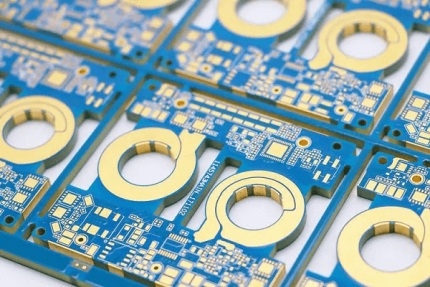
A copper coin PCB (also known as an embedded copper PCB) is a specialized type of printed circuit board in which a solid copper block is embedded into the inner layers or pre-machined cavities of the PCB, and then laminated together with the board using thermally conductive insulating materials.
Unlike conventional PCBs that rely only on copper traces and dielectric materials, this structure introduces a three-dimensional copper element to enhance performance locally.
Core Definition (from three perspectives):
Structural aspect
Instead of relying solely on copper foils, a solid copper block is embedded within the PCB, forming a 3D conductive structure.
Functional aspect
Acts as an efficient thermal path to dissipate heat from high-power components
Can also serve as a low-resistance path for high current conduction
Process aspect
It belongs to advanced PCB manufacturing processes, requiring precision cavity milling and copper inlay before lamination, addressing bonding and stress challenges between copper and base materials like FR4.
In simple terms: A copper coin PCB replaces part of the insulating material with solid copper to improve thermal, electrical, and mechanical performance.
2. How Does It Work? (Thermal Principle)
2.1 The effectiveness of copper coin PCBs comes from the large difference in thermal conductivity between materials:
Copper: ~ 400 W/m·K
FR4: ~ 0.3–0.4 W/m·K
Nearly 1000× difference
2.2 Heat Transfer Path Comparison
Conventional PCB:
Component → Copper pad → FR4 → Heatsink
Copper Coin PCB:
Component → Copper coin → Heatsink
2.3 Key Advantage
Eliminates low thermal conductivity materials in the heat path
Creates a direct vertical heat conduction channel
Significantly reduces thermal resistance
This is not just “better cooling” — it is: A fundamental improvement in heat flow path design
3. Why Use a Copper Coin PCB?
As electronics move toward higher power density and miniaturization, traditional thermal solutions are reaching their limits.
3.1 Design Intent and Key Functions:
Efficient heat dissipation & thermal spreading
Copper quickly transfers heat away, reducing hot spots.
Enhanced current carrying capability
The low resistance of copper allows it to carry tens of amps, outperforming thick copper traces.
Improved mechanical strength
In high-stress areas (e.g., connectors), copper coins act like “rivets” to reinforce the structure.
Low thermal resistance path
Provides a reliable thermal path for high-power devices such as LEDs and GaN components.
3.2 Compared to Conventional Solutions
Solution Limitation:
Thermal vias Limited by via density and resin conductivity
Heavy copper Improves lateral heat flow only
MCPCB Limited design flexibility
Copper coin PCB advantages:
Localized thermal enhancement
High efficiency without redesigning the entire board
Compatible with multilayer and complex designs4. Key Design Considerations (Critical Section)
4.1 Copper Coin Size & Placement
Should match or slightly exceed the component thermal pad
Must align directly under the heat source
Risks:
Too small → insufficient heat dissipation
Too large → increased stress and warpage
4.2 Thickness Selection
Typical range: 0.5 mm – 3.0 mm
Thicker → better thermal performance
But increases manufacturing complexity and stress
4.3 Coplanarity (Surface Flatness)
The copper coin must be flush with the PCB surface:
Typical tolerance:
±30 µm – ±50 µm
Otherwise:
Solder voids
Poor component contact
Increased thermal resistance
4.4 Clearance Control
Distance between copper coin and traces/vias:
Typically ≥ 0.25 mm – 0.35 mm
To prevent:
Electrical short circuits
Insulation failure
4.5 Interface Integrity
The gap between the copper coin and cavity must be:
Fully filled with thermally conductive material
Free of voids
Because:
Air gaps significantly degrade thermal performance
5. Special Manufacturing Process Challenges
Copper coin PCB manufacturing differs significantly from standard PCB processes.
5.1 Cavity Milling & Inlay
CNC machining creates precise cavities in the core
Copper coin is inserted and bonded with conductive materials
5.2 Lamination & Resin Flow Control
Challenges:
Copper absorbs heat → affects resin flow
Risk of voids or misalignment
Solutions:
Optimized lamination parameters
Resin flow channel design
5.3 Positioning & Fixation
High-temperature tapes or fixtures used
Or mechanical locking designs (T-shape, U-shape)
5.4 Reliability Risks
Due to CTE mismatch between copper and FR4:
Delamination
Board warpage
5.5 Drilling Challenges
Mechanical drilling must avoid copper areas
Risk of tool breakage
Solutions:
Laser drilling
Pre-drilled copper coins
6. Key Specifications & Capabilities
Size Range
Thickness: 0.5 mm – 3.0 mm
Planar size: approx. 3×3 mm to 40×100 mm
Structural Shapes
I-shape (rectangular)
T-shape (anti-pullout)
U-shape (enhanced bonding)
Precision Control
Flatness: ±30 µm – ±50 µm
Clearance: ≥ 0.25–0.35 mm
Performance Requirements
Must pass:
High voltage testing
High current testing
Ensuring reliability under demanding conditions
7. Conclusion
Copper coin PCB is not just a structural variation — it is a targeted thermal and electrical engineering solution for high-power applications.
It enables a low-resistance, high-efficiency path for both heat and current exactly where it is needed.
With the rapid adoption of GaN, SiC, automotive electronics, and high-power systems, copper coin PCB is becoming an increasingly critical technology in advanced PCB design.