A Trustworthy PCB and Electronic Manufacturing Enterprise! Contact Us


A turnkey PCB assembly service, often called turnkey PCBA, means one supplier builds your bare boards, buys every component, assembles the lot and ships you something that works. You send files, you get finished boards. That is the pitch, and for most small and mid-sized hardware teams it is close to the truth, as long as the files are clean and the parts are available. This article walks through how a turnkey job actually moves, where the money and the delays hide, and what to prepare before you ask anyone for a quote.
The alternative is doing it in pieces. You order bare boards from one shop, chase parts across three distributors, and then hunt for someone to solder it all together. Each handoff costs days, and each one is a chance for a wrong footprint or a missing reel. When a PCB component sourcing team sits inside the same company as the assembly line, the person who finds a part is the person who has to place it. Problems surface earlier and get fixed faster.
There are middle options too. Some buyers keep control of an expensive or scarce chip and let the factory buy everything else. Others ship all the parts and pay only for SMT assembly and soldering. These setups make sense in specific cases, such as one chip with a long allocation lead time, or a customer who gets parts at special pricing. For everything else, full turnkey is simpler, because there is only one party to hold responsible when something goes wrong.
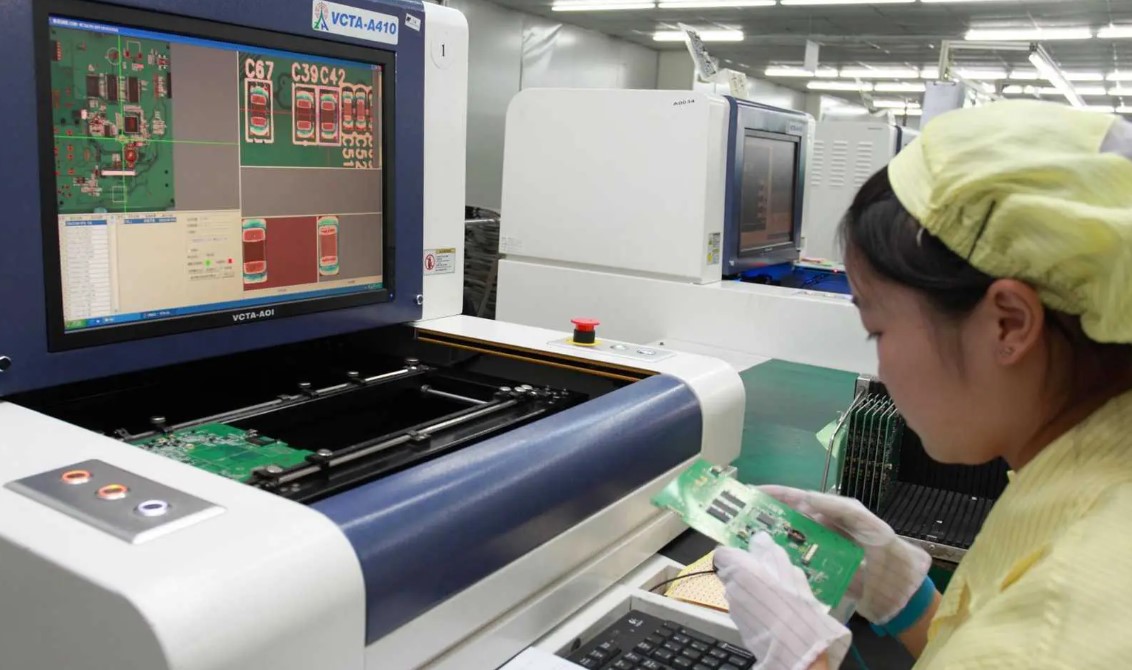
How a turnkey order moves
It starts with your files: Gerber or ODB++ data for the board, a bill of materials with manufacturer part numbers, a pick-and-place file with coordinates, and an assembly drawing. A good engineer reads all four before quoting, because the quote depends on what is in them. They check that every BOM line matches a real, buyable part, that the footprints in the Gerbers match the datasheets, and that the placement file agrees with the drawing. Mismatches here are the most common reason a first order stalls. Finding one on day one costs nothing. Finding it on the line costs a week.
Then the work splits into two tracks that run in parallel. The board goes to fabrication, which takes a few days for a simple two-layer and a couple of weeks for a complex stack-up. At the same time purchasing orders the parts. The two meet at the assembly floor, and the order is only as fast as the slower track. In practice that is usually the parts, not the boards.
Component sourcing is where jobs slip
A bill of materials with eighty lines will typically have seventy that are easy, nine that need a short wait, and one or two that are out of stock or on allocation. A good supplier tells you about the problem lines straight away and offers options: an equivalent part with the same footprint and specs, a different package, or a broker quote at a higher price. You decide. What you do not want is a supplier who quietly swaps a part, or sits on a shortage for two weeks.
Ask about authenticity. Parts should come from authorised distributors or the manufacturer, with traceable lot codes. Counterfeit and recycled chips are rare through proper channels and far more common in random spot-market buys. If a broker purchase is unavoidable, ask for incoming inspection and, for critical parts, testing. It also helps to agree on approved alternates in advance. Writing “any equivalent” on the BOM is risky. A short list of acceptable substitutes for resistors and capacitors saves days and keeps control with you.
Minimum order quantities matter at low volume. Passive parts often come on reels of thousands, and a prototype run of ten boards uses a handful. Some suppliers fold the leftover cost into the unit price, some bill you for the reel, and some keep the surplus for your next order. That choice changes your cost per board a lot, so ask how it is handled.
The DFM review is the cheap fix
Before anything is made, a design-for-manufacturing review catches what does not show up on screen: pads too close to the board edge, a fine-pitch part with too little stencil clearance, tombstoning risk on small passives, missing fiducials, silkscreen over pads. Most suppliers do this free on a turnkey order, because it protects their yield too. Read the report properly. Fixing a footprint in the CAD tool takes an hour. Fixing it after the boards are built means scrap.
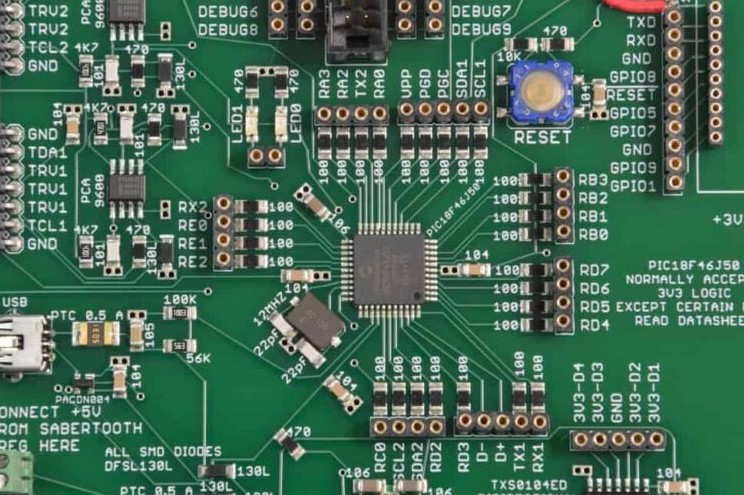
Assembly and testing
For surface-mount work, solder paste is printed through a stencil, machines place the parts, and the board runs through a reflow oven with a temperature profile matched to the parts and the paste. Boards with through-hole parts then go through wave or selective soldering, or get hand work for odd shapes. Mixed boards, with fine-pitch chips on both sides and big connectors, take longer because each side is a separate pass.
Inspection comes next. Automated optical inspection checks for missing parts, wrong polarity and solder bridges. X-ray looks under BGAs and QFNs, where nothing is visible from the side. Beyond that, the right level of electrical testing depends on your product. An in-circuit or flying-probe test catches shorts and opens. A functional test powers the board and runs it through real behaviour, which catches faults that look fine under a camera. If you want functional testing, supply a procedure or a fixture, and say clearly what pass and fail look like.
Cost and lead time
A turnkey PCB assembly service quote has several parts: the bare board, the components, assembly labour, one-time setup such as stencils and programming, and testing. On small runs the setup charges and engineering time dominate, which is why ten boards can cost almost as much per piece as a hundred. On larger runs component cost takes over and the price becomes more predictable. Ask for a quote broken out by these items at two or three quantities, so you can see where the curve bends.
Lead time follows parts availability first and board complexity second. A simple board with common parts can ship in a week or two. A complex one with a long-lead chip can take a month or more, and paying extra does not make a shortage vanish. Expedite fees can compress fabrication and assembly, but not a manufacturer’s allocation queue. If your schedule is tight, say so before the supplier quotes, so purchases can start early.
Choosing a supplier
Price matters, but it is not the most useful thing to compare. When you evaluate a turnkey PCB assembly service, watch how they behave before you have paid anything. Do they ask questions about your design, or just send a number? Do they flag BOM problems without being asked? Can they say which quality standards they work to, and show a sample inspection report? Will they tell you plainly what they cannot do?
A few other checks help. Is engineering support a named person or a shared inbox? How do they handle design changes in the middle of an order, and do they keep your files organised for repeat builds? For regulated products, how long do they keep lot records? And what happens when a board fails: who reports it, who pays for rework, and what does the warranty cover?
Common problems and how to avoid them
Ambiguous BOM entries cause more delays than anything else. Use full manufacturer part numbers, not generic descriptions, and mark any part that must not be substituted. Footprints copied from a library without checking the datasheet come second, so verify every new one. Missing polarity marks come third, so put pin one on both the silkscreen and the assembly drawing. And if a board needs programming or calibration, hand over the firmware file and the procedure at the start, not after the boards are built.
What to send for a quote
Send the Gerber or ODB++ files, a BOM with manufacturer part numbers and quantities per board, the pick-and-place file, the assembly drawing, and the board specification: layer count, thickness, copper weight, surface finish and solder mask colour. Add the quantities you want priced, your target lead time, any approved substitutes, test requirements and certification needs. If you have a sample or an earlier version of the board, mention it. The more complete the package, the more accurate the quote, and the fewer surprises on the floor.
Closing
Turnkey is not magic. It moves the coordination work from your desk to someone whose job is to do it every day. The best results come from teams that give clean data, answer questions quickly and treat the supplier as part of the engineering process. If you are planning a new build or moving an existing product to a new factory, send your files to our team for a review and a quotation, and we will point out what looks risky before any parts are ordered. A good turnkey PCB assembly service should make your project simpler, not add one more thing to manage.