A Trustworthy PCB and Electronic Manufacturing Enterprise! Contact Us


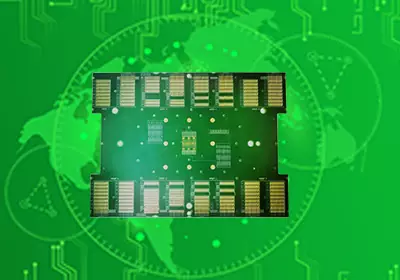
The metal core PCBs(MCPCB) consist of a standard printed circuit board bonded to a metal substrate with superior thermal conductivity, which enhances heat dissipation at the board level. Aluminum-based PCBs are among the most common types; they provide efficient heat dissipation and cooling for electronic components, thereby improving the overall performance of the product.
What are the base materials for Metal Core PCBs?
Now, let's address the core question: what materials are used as the base for metal core PCBs?
Due to their excellent thermal and electrical conductivity, copper and aluminum are the two most frequently used materials for the metal core. Each type is described in detail below:
Copper-core PCBs: Copper-core PCBs offer superior thermal conductivity compared to aluminum-core PCBs. This is a significant advantage for highly compact systems that operate at high switching frequencies and power levels, where effective heat management is critical. Such systems rely on copper-core PCBs more than any other type. Low-cost FR4 material can be used as an insulator, and thermal vias can be created within the PCB through a drilling process.
Aluminum-core PCBs: Aluminum-core PCBs are a more widely adopted choice due to their advantages in terms of cost, weight, and availability. Furthermore, aluminum is easier to mill than copper. Aluminum’s coefficient of thermal expansion is close to that of copper, making it the preferred choice when dimensional stability is required. Additionally, as the third most abundant metal on Earth, aluminum is more affordable than most other metals. Aluminum-core PCBs can also be anodized to form an insulating oxide layer.
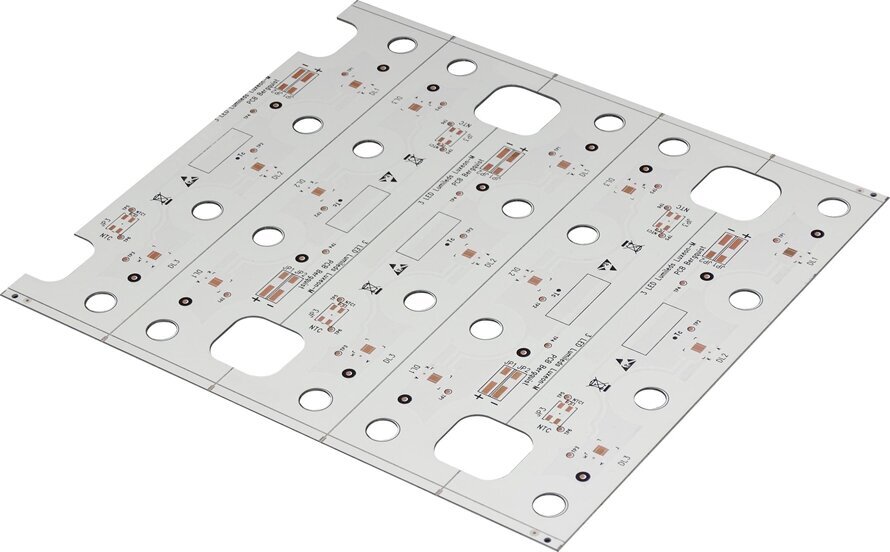
metal core PCBs
Aluminum, Copper, and Steel: Balancing Cost and Performance
The vast majority of MCPCBs on the market use aluminum substrates. The reason is straightforward: aluminum’s thermal conductivity is sufficient for most applications, and it is both lightweight and significantly more cost-effective than copper. For consumer LED lighting, standard power modules, and automotive electronics—where extreme heat dissipation is not required—aluminum substrates offer the best balance of cost and performance.
Copper substrates, by contrast, possess roughly twice the thermal conductivity of aluminum and offer better dimensional stability, making them well-suited for high-frequency circuits and environments subject to significant temperature fluctuations. However, copper is both heavy and expensive; it is only necessary to use a copper-based substrate when an aluminum-based one is insufficient to handle the thermal load. As for steel-based substrates, their thermal conductivity—ranging from only 20 to 60 W/m·K—is far inferior to that of aluminum or copper. They are generally used only when specific requirements, such as high mechanical strength or electromagnetic shielding, take precedence over thermal performance. The selection logic is as follows: first, determine whether the thermal load exceeds the capacity of an aluminum substrate; if it does, consider copper. Steel is chosen only when there are non-thermal reasons for doing so.
Advantages of Metal-Based PCBs
Reliability: In products that generate significant heat or require high heat-dissipation efficiency, a substrate capable of withstanding thermal stress and rapidly conducting heat away is ideal. Such materials help extend product lifespan, enhance stability, and improve overall durability.
Heat Dissipation: LED products often generate substantial heat during the conversion of electrical energy into light. Standard epoxy-resin boards struggle to withstand prolonged exposure to high heat, which can eventually lead to quality issues. Metal core PCBs (MCPCBs) address overheating by efficiently transferring thermal energy from one side of the board to the other.
High-Temperature Tolerance: Unlike FR-4-based technology, metal-core PCBs are well-suited for applications involving high operating temperatures.
Lightweight: Metal-core PCBs typically utilize copper or aluminum. These metals offer excellent ductility and rigidity, allowing for very thin, lightweight designs that remain highly resistant to damage.
Recyclability: Metals are eco-friendly, recyclable materials; they are non-toxic and can be easily recovered and reused.
High LED Density: Thanks to the high thermal conductivity of metal-based PCBs, a greater number of light sources can be densely packed onto the board, enabling high-performance applications.
What Are the Applications for Metal-Core PCBs?
The numerous advantages of metal-core PCBs make them a popular choice across a wide range of applications, including:
LED Lighting:
As previously mentioned, thermal management is critical for LED applications. Metal-core PCBs provide effective heat dissipation, which helps improve both the optical efficiency and brightness of LED lighting systems. Energy and Power Applications:
In energy and power applications, power modules—which function as converters—utilize metal core PCBs (MCPCBs) that act as heat sinks during operation. These boards ensure optimal performance while effectively managing the temperature of the entire system. They are also employed in inverter technology for renewable energy sources, such as photovoltaic (PV) systems.
Automotive Systems:
Metal-core PCBs are used in the electronic control units (ECUs) of vehicles. Given that vehicles also feature extensive lighting for warnings and indicators, MCPCBs are utilized in LED boards to provide superior thermal management. Other automotive components, including navigation and sensor systems, also rely on MCPCBs.
Today, metal core PCBs (MCPCBs) have become a core solution for addressing heat dissipation challenges in high-power applications. From everyday LED lighting and demanding automotive electronic control units (ECUs) to energy conversion and photovoltaic inverters, metal core PCBs are empowering a wide range of industries, thanks to their exceptional thermal conductivity and high reliability.