A Trustworthy PCB and Electronic Manufacturing Enterprise! Contact Us


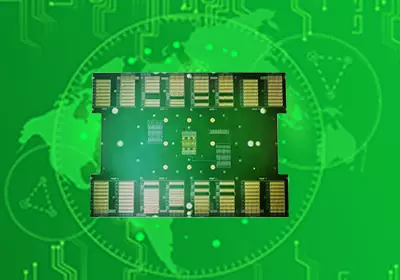
A presensitized PCB board refers to a printed circuit board that has been pre-coated with a layer of photoresist. It is termed "presensitized" because the board arrives from the factory with a uniform coating of photosensitive material already applied. To create the circuit pattern on the board—thereby producing a complete circuit board—one simply needs to perform ultraviolet (UV) exposure followed by developing and etching processes. (No manual application of photoresist is required.)
Unlike traditional PCBs, presensitized PCBs do not require manual application of photoresist; they are ready for use immediately upon unsealing. Consequently, they are particularly well-suited for single-sided PCBs, rapid prototyping and project development, as well as educational applications. Presensitized PCBs offer numerous advantages, including the elimination of manual coating errors, high pattern precision with sharp details, suitability for rapid small-batch production, a professional and aesthetically pleasing finished product, and a wide range of available sizes and thicknesses with ample supply.
Structure and Types of Presensitized PCB Boards
A presensitized PCB typically consists of three main components: a substrate, a copper layer, and a photosensitive film. The substrate is most commonly FR-4 epoxy fiberglass board, though a small number of boards utilize high-frequency materials or flexible substrates. The thickness of the copper layer—selectable from 0.5 oz to 3 oz depending on design requirements—determines the circuit's current-carrying capacity and signal transmission capabilities. Based on their curing mechanisms and photosensitive principles, photosensitive films can be broadly categorized into two types: dry film and liquid photoresist. Presensitized PCB boards utilizing dry film feature a uniform layer of dry photosensitive material pre-applied to the surface, which facilitates mass production. Conversely, liquid photoresist is applied via a coating process prior to production; while this requires stricter process control, it delivers superior performance for high-precision circuitry. Furthermore, based on the exposure method employed, presensitized PCBs can be classified as either negative-acting or positive-acting. With negative-acting boards, the photosensitive areas exposed to light cure and remain on the board, while the unexposed areas are removed. With positive-acting boards, the process is reversed: the exposed areas dissolve away, while the unexposed areas remain intact.
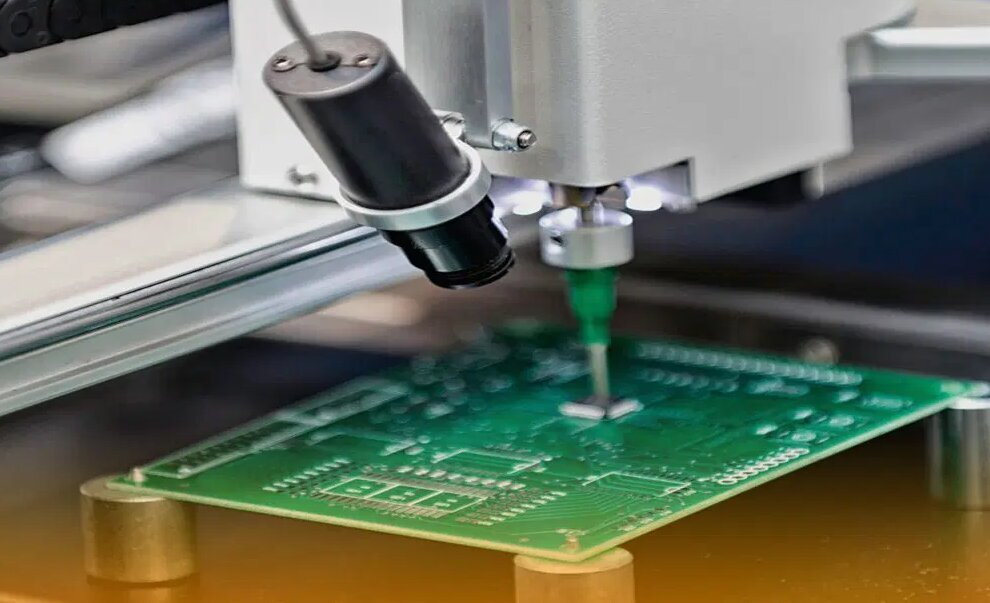
presensitized PCB board
The Working Principle of Presensitized PCB Boards
The core component of a presensitized PCB board is the photosensitive resist. Upon exposure to ultraviolet (UV) light, this resist undergoes a chemical reaction that alters the solubility of the exposed areas relative to the unexposed areas, thereby allowing the circuit pattern to be formed within the developing solution. The general workflow is as follows:
Circuit Design
Use CAD software to draft the circuit schematic and print it onto a transparent film.
Exposure
Place the transparent film directly onto the photosensitive PCB board and expose it to ultraviolet (UV) light. The photosensitive layer in the areas exposed to UV light will cure (harden), while the unexposed areas remain soluble in the developer solution.
Developing
Rinse the PCB board with a developer solution to remove the uncured photosensitive layer, thereby forming a protective mask that outlines the circuit pattern.
Etching
Immerse the developed PCB board in an etching solution (such as ferric chloride) to dissolve the copper layer in the unprotected areas, leaving behind the desired circuit pattern.
Stripping and Cleaning
Remove the residual photosensitive layer and clean the PCB board; the printed circuit board is now complete.
The key features of presensitized PCB boards are as follows:
No Manual Coating Required; Simple Operation: The surface of the PCB board is already coated with a photoresist (photosensitive material), eliminating the need for manual photoresist application. This allows for direct progression to the UV exposure and developing stages, thereby reducing the complexity of manual operations and minimizing the potential for errors.
High Circuit Transfer Precision: After UV exposure, the circuit pattern is transferred directly onto the PCB substrate. This makes it ideal for circuit designs requiring fine line widths and high precision.
Strict Environmental Requirements: The photosensitive layer requires high light sensitivity; therefore, the boards must be handled and stored with care (typically in a dark place) to avoid accidental exposure to light sources.
After reading this article, do you have a better understanding of Presensitized PCB Boards? As a vital material for electronic prototyping and small-batch production, presensitized PCB boards have gained widespread popularity among electronics enthusiasts, engineers, and educational institutions due to their high efficiency, precision, and ease of use. Selecting the appropriate photosensitive type and substrate material, along with carefully controlling the exposure and developing processes, are critical factors in ensuring the quality of the finished circuit board. As electronic products continue to evolve toward greater miniaturization and precision, presensitized PCB boards will undoubtedly continue to play a pivotal role in rapid prototyping and circuit board development.