A Trustworthy PCB and Electronic Manufacturing Enterprise! Contact Us


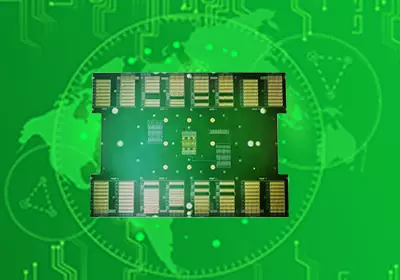
An electronics board serves as the fundamental structural and electrical backbone of nearly all modern electronic devices, quietly powering everyday tech and industrial-grade equipment across countless industries. Most users and even industry beginners overlook this tiny yet critical component, but no sophisticated electronic system can operate stably and efficiently without a well-designed and precisely manufactured electronics board. From portable consumer gadgets to high-precision medical devices and rugged aerospace systems, this core hardware unit defines device performance, stability, durability, and overall functional scalability. Understanding its working principles, classification, application scenarios, and selection standards is essential for electronics engineers, product developers, procurement specialists, and tech enthusiasts who aim to optimize product design and improve equipment reliability.
In essence, an electronics board, commonly known as a printed circuit board (PCB) in industrial terminology, is a laminated board structure that integrates conductive circuits, insulating substrates, and electronic component welding pads. Its core function is to provide fixed installation positions for resistors, capacitors, chips, sensors, connectors, and other electronic parts, while realizing stable electrical signal transmission and power distribution between different components. Unlike discrete circuit designs that rely on messy manual wiring, standardized electronics board manufacturing centralizes and regularizes circuit lines, effectively reducing circuit interference, avoiding short circuits and open circuits caused by chaotic wiring, and greatly improving the consistency and safety of electronic products. This structural optimization also lays the foundation for the miniaturization, lightweight, and high integration of modern electronic equipment, which explains why almost all streamlined and intelligent electronic devices on the market adopt board-based circuit design solutions.
To fully grasp the practical value of the electronics board, it is necessary to classify it according to structural characteristics and application requirements, as different types of boards correspond to completely different usage scenarios and performance standards. The most basic type is the single-sided electronics board, which has conductive circuits and component pads arranged on only one side of the insulating substrate. This type of board features a simple production process, low manufacturing cost, and short production cycle, making it widely used in low-power, simple-function electronic products such as ordinary LED lamps, small household remote controls, simple power adapters, and basic toy electronic components. For low-end electronic products that do not require complex circuit logic and high-density wiring, single-sided boards can fully meet operational needs and control production costs to the greatest extent, which is why they still occupy a large market share in the civilian low-end electronics field.
Double-sided electronics boards are an upgraded version of single-sided structures, with conductive circuits and welding layers distributed on both sides of the insulating substrate. The two-sided circuits are connected through metal via holes, which effectively doubles the wiring area and circuit density without increasing the overall board size. This structural improvement enables the device to carry more electronic components and support more complex signal transmission logic. Double-sided boards are mostly used in mid-range consumer electronic products and ordinary industrial control equipment, including smart home controllers, desktop computer peripheral devices, automotive ordinary electronic modules, and medium-sized communication equipment. Balancing cost and performance, this type of electronics board has become the most mainstream choice in the mid-tier electronics manufacturing market, suitable for most products that require moderate integration and stable operation.
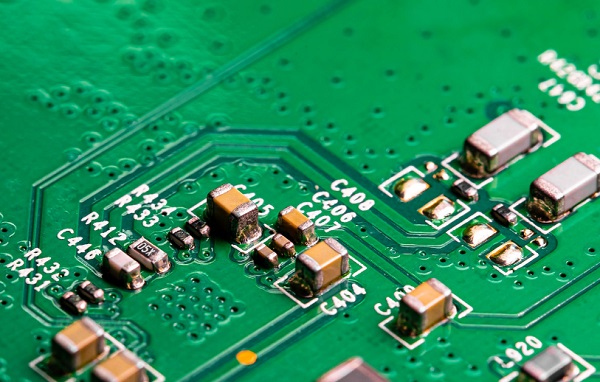
With the rapid development of high-tech industries such as artificial intelligence, intelligent manufacturing, and aerospace, ordinary single and double-sided electronics boards can no longer meet the demand for high-density wiring, multi-signal parallel transmission, and miniaturization of high-end equipment. Thus, multi-layer electronics boards have become the core choice for high-precision electronic products. A multi-layer board is composed of multiple layers of conductive circuits and insulating substrates stacked and pressed together, with professional interlayer via technology to realize circuit conduction between different layers. It can integrate complex power circuits, signal circuits, and grounding circuits in a limited tiny space, effectively isolating interference between different signal layers, improving anti-interference ability and signal transmission accuracy, and reducing equipment failure rates. High-end smartphones, laptop motherboards, industrial server boards, medical precision diagnostic equipment, and aerospace navigation systems all rely on high-quality multi-layer electronics boards to achieve ultra-high integration and stable long-term operation.
Beyond structural classification, the practical application value of the electronics board is fully reflected in diverse industry scenarios, covering almost all fields related to electronic technology. The consumer electronics industry is the largest application market for electronics boards, closely linked to people’s daily lives. Smartphones, tablets, wearable watches, wireless earphones, game consoles, and smart home devices such as smart speakers, intelligent air conditioners, and robot vacuum cleaners all take customized electronics boards as their core operating carriers. In these portable and intelligent consumer products, the board’s wiring precision, size control, and heat dissipation performance directly determine the product’s operating speed, battery life, and user experience. For example, the high-density multi-layer board inside a smartphone can integrate thousands of electronic components, realizing functions such as high-speed network transmission, high-definition image processing, and multi-sensor synchronous sensing, supporting the intelligent and multi-functional experience of modern mobile phones.
The industrial automation sector also relies heavily on reliable electronics boards to support the stable operation of industrial equipment. Industrial equipment has stricter operating environment requirements than civilian equipment, often working in high-temperature, high-humidity, dusty, and strong electromagnetic interference factory environments. Therefore, industrial-grade electronics boards need to have excellent high and low temperature resistance, anti-electromagnetic interference capability, and long-term operational stability. Programmable logic controllers (PLCs), industrial robot control modules, automated assembly line sensors, intelligent monitoring equipment, and industrial Internet of Things (IoT) gateways all use high-strength industrial electronics boards. These boards can maintain stable circuit transmission and component operation under harsh industrial conditions, ensure the continuous and safe operation of automated production lines, reduce equipment downtime caused by circuit failures, and improve industrial production efficiency and production safety.
The automotive electronics industry is another key development scenario for modern electronics board applications. With the rapid popularization of new energy vehicles and intelligent connected vehicles, the number of electronic modules in automobiles has increased exponentially, and the demand for high-performance electronics boards has continued to rise. Traditional fuel vehicles only use simple boards for basic functions such as vehicle lighting and instrument display, while modern intelligent vehicles need a large number of high-precision boards to support engine control units (ECUs), advanced driver-assistance systems (ADAS), vehicle infotainment systems, battery management systems (BMS), and automatic parking systems. Automotive-grade electronics boards need to pass strict vibration resistance, impact resistance, and temperature resistance tests to adapt to complex road conditions and changing in-vehicle temperatures, ensuring the stable operation of vehicle electronic systems and guaranteeing driving safety. As vehicle intelligence continues to upgrade, the performance requirements for automotive electronics boards will become higher, bringing broader market space for high-end board manufacturing.
In the medical device industry, the precision and reliability of electronics boards are related to human life and health, so the industry has formulated extremely strict production and testing standards for such boards. Medical equipment such as nuclear magnetic resonance instruments, CT scanners, ultrasound diagnostic instruments, patient real-time monitoring equipment, and portable blood glucose monitors all require high-precision, low-noise electronics boards. These boards need to realize ultra-stable weak signal collection and transmission, avoid signal interference causing diagnostic data errors, and at the same time meet medical-grade safety and environmental protection standards, with no harmful substance precipitation and good biocompatibility. High-quality medical electronics boards can ensure the accurate operation of medical equipment, provide reliable data support for doctors’ diagnosis and treatment, and effectively protect patient safety.
Aerospace and national defense fields represent the highest standard of electronics board application scenarios, putting forward extreme requirements for board performance, quality, and environmental adaptability. Aerospace equipment such as satellites, spacecraft, and aviation avionics systems work in extreme environments such as high altitude, low pressure, strong radiation, and extreme temperature differences. The electronics boards used in these devices must have ultra-high radiation resistance, extreme temperature resistance, anti-vibration and anti-impact capabilities, and ultra-low failure rates. Every circuit wiring and component welding link of aerospace-grade boards needs to undergo precise processing and repeated testing to ensure that the equipment can operate stably for a long time in extreme space environments. The technological level of aerospace electronics boards also represents the top manufacturing level of the global electronics industry, and it is an important symbol of measuring a country’s electronic manufacturing strength.
In addition to large-scale industrial and high-tech fields, electronics boards also play an indispensable role in emerging fields such as smart security, intelligent lighting, and wearable medical devices. Smart monitoring cameras, access control systems, and fire alarm systems in the security industry rely on stable electronics boards to realize real-time video collection, data transmission, and alarm trigger functions. Intelligent street lamps and landscape lighting equipment use customized boards to realize intelligent switch control, brightness adjustment, and energy-saving operation. With the continuous innovation of emerging technologies, the application scenarios of electronics boards are still expanding, and the market demand is showing a continuous growth trend.
At the same time, green and environmental protection manufacturing has become an important development theme of the electronics board industry. With the improvement of global environmental protection standards, low-carbon, non-toxic, and pollution-free raw materials and production processes are gradually replacing traditional high-pollution processes. Intelligent manufacturing and automated production equipment are also widely used in board production, which effectively improves product precision and production efficiency, reduces manual errors, and realizes standardized and large-scale production. In the future, with the in-depth integration of 5G, artificial intelligence, the Internet of Things, and new energy technologies, the technical requirements and market scale of electronics boards will continue to expand, and the industry will usher in a longer-term development dividend.
In conclusion, the electronics board is not only a basic hardware component of electronic equipment but also a core carrier that determines product performance, quality, and innovative development. It penetrates every link from civilian consumer electronics to high-end aerospace technology, supporting the normal operation and iterative upgrading of all modern electronic systems. For electronic product developers, manufacturers, and industry practitioners, paying attention to the technical iteration and quality optimization of electronics boards is crucial to improving product competitiveness, adapting to industry development trends, and expanding market share. In the era of rapid development of global electronic information technology, the seemingly ordinary electronics board will continue to play an irreplaceable core value and accompany the continuous innovation and progress of the entire electronic industry.