A Trustworthy PCB and Electronic Manufacturing Enterprise! Contact Us


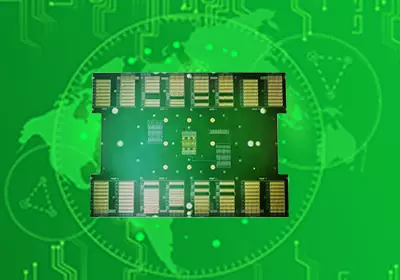
Understanding core pcb board parts is the first step for anyone designing, assembling, or troubleshooting electronic circuits, as these individual components work together to power nearly every modern electronic device. From simple household gadgets to complex industrial control systems, every functional printed circuit board relies on well-matched and properly soldered components to maintain stable current flow, accurate signal transmission, and long-term operational reliability. Many circuit failures stem not from board damage itself, but from mismatched, aging, or poorly installed parts, making component knowledge essential for engineers, procurement teams, and electronics maintenance technicians. Whether you are prototyping a new product, replacing faulty hardware, or optimizing circuit performance, mastering the roles and selection rules of basic components can greatly improve production yield and equipment stability.
To break down the system clearly, pcb board parts can be divided into three major categories: passive components, active components, and electromechanical auxiliary parts. Each category carries independent and irreplaceable circuit responsibilities, and none can be omitted in formal circuit design. Passive components refer to parts that do not require external power to operate, mainly including resistors, capacitors, and inductors. These basic building blocks regulate current, store energy, and filter interference, forming the most fundamental operating framework of electronic circuits. Active components, such as diodes, transistors, and integrated circuits, need power supply support to amplify signals, switch circuits, and execute logical operations, serving as the “brain” of electronic equipment. Electromechanical auxiliary parts cover connectors, switches, fuses, and sensors, responsible for circuit connection, safety protection, and signal interaction with the external environment.
Resistors are the most common components found in all circuit designs. Their core function is to limit current and divide voltage, preventing excessive current from burning out sensitive chips and modules. In simple terms, resistors act as traffic controllers for electric current, ensuring that each circuit unit obtains stable and safe electrical power. There are multiple resistor types for different scenarios: fixed resistors provide stable resistance values for conventional circuits, while variable resistors allow manual adjustment to adapt to variable power and signal requirements. Precision resistors are widely used in medical devices and testing equipment that demand high data accuracy, while high-power resistors are customized for industrial equipment with large current loads. Although resistors have a simple structure, unreasonable resistance matching will directly cause circuit overheating, signal distortion, or equipment startup failure, so they must be selected strictly according to circuit design parameters.
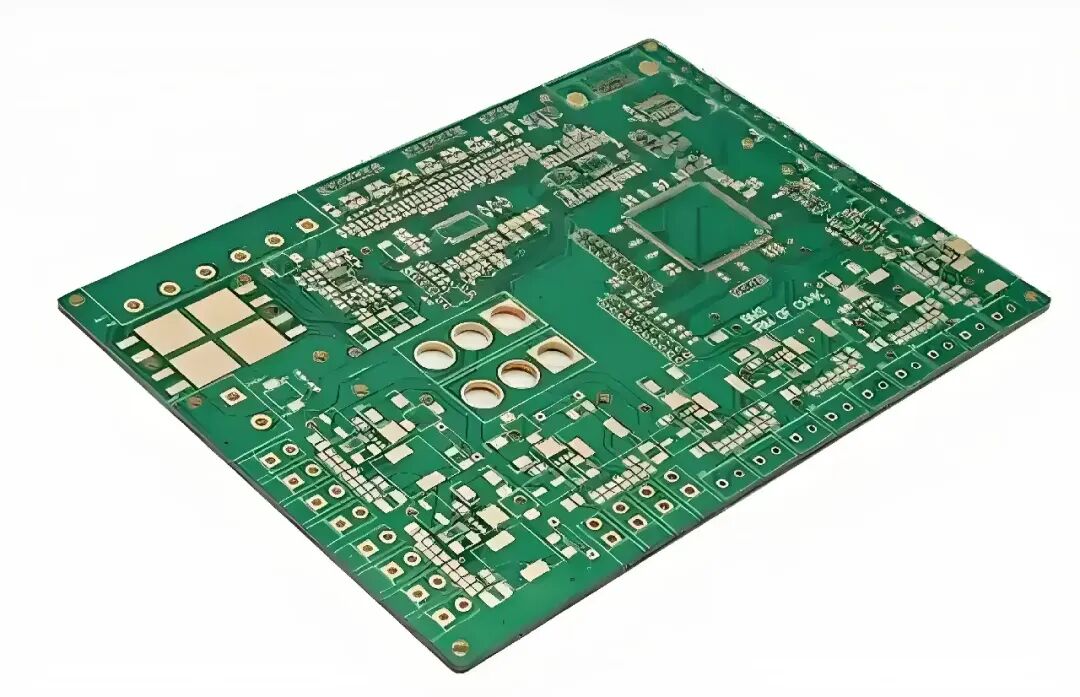
Capacitors rank second among essential circuit components, undertaking energy storage, voltage stabilization, and noise filtering tasks. In daily circuit operation, voltage fluctuations and instantaneous current surges often occur during equipment startup, shutdown, and load switching. Capacitors can quickly store and release electric energy to smooth voltage changes, maintain circuit stability, and filter out high-frequency clutter interference that affects signal accuracy. Different capacitor types have distinct application focuses: ceramic capacitors are small in size and low in cost, suitable for high-frequency filtering and ordinary voltage stabilization; electrolytic capacitors feature large capacity and are mostly used for power supply filtering and energy storage in power circuits; tantalum capacitors deliver better stability and anti-aging performance, ideal for high-precision and long-life electronic products such as automotive electronics and industrial control equipment. Reasonable capacitor collocation can effectively reduce circuit ripple and improve the anti-interference ability of the whole machine.
Inductors are another vital type of passive component, mainly used for current filtering, electromagnetic interference suppression, and signal oscillation. Unlike capacitors that process voltage changes, inductors focus on balancing current fluctuations, blocking high-frequency alternating current, and stabilizing low-frequency current and direct current. In switching power supply circuits, inductors cooperate with capacitors to form filter networks, effectively reducing power supply noise and improving power quality. In high-frequency communication equipment, inductors can match circuit impedance to ensure stable signal transmission. Although inductors are less frequently mentioned than resistors and capacitors, they play an indispensable role in power supply design, communication circuits, and automotive electronic systems. Poor inductor selection will lead to unstable equipment power supply, weak signal reception, and even frequent circuit restart failures.
Active components are the core functional units of pcb board parts, determining the intelligent and operational capabilities of electronic equipment. Diodes, the most basic active components, have unidirectional conductivity, allowing current to flow in only one direction and effectively preventing reverse current from damaging circuits. Ordinary silicon diodes are used for circuit rectification and isolation, Zener diodes for precise voltage stabilization, and LED diodes for power indication and signal prompt. Transistors serve as circuit switches and signal amplifiers, realizing current amplification and fast circuit switching, which is the basis for automatic control and signal processing. Integrated circuit chips, the most complex active components, integrate thousands of circuit units inside, completing data calculation, logical judgment, and program operation, acting as the core control center of smartphones, industrial controllers, and smart devices.
Electromechanical auxiliary components guarantee the usability, safety, and scalability of electronic equipment. Connectors realize electrical connection between the core circuit board and external modules, supporting power access, signal transmission, and equipment assembly and disassembly. High-quality connectors feature good conductivity, anti-oxidation performance, and stable plugging life, avoiding poor contact caused by long-term use. Switches control circuit on and off, including ordinary touch switches, DIP switches, and waterproof switches, adapting to different equipment operation scenarios. Fuses are critical safety components; when circuit current exceeds the safe threshold, the fuse will automatically blow to cut off the circuit, protecting expensive chips and core modules from burnout. Sensors convert external physical signals such as temperature, light, and pressure into electrical signals, enabling intelligent perception and automatic control of equipment.
In actual PCB production and equipment maintenance, the matching and quality of pcb board parts directly determine the product yield and service life. Many low-cost electronic products on the market use inferior components with unstable parameters and poor anti-aging performance, leading to short service life and high failure rates. For industrial equipment, automotive electronics, and medical devices that require long-term stable operation, manufacturers must select standard, high-quality components that meet industry certification standards. In addition to component quality, standardized welding processes are also crucial. Virtual welding, missing welding, and tin overflow will cause poor component contact and hidden circuit faults, so finished boards need strict electrical testing and aging screening before leaving the factory.
Different application scenarios have differentiated requirements for component selection. Civil consumer electronics such as remote controls, small home appliances, and ordinary lighting equipment prioritize cost performance, adopting conventional standard components to meet basic functional needs. Industrial control equipment that runs continuously all year round needs components with wide temperature resistance, anti-interference, and anti-aging properties to adapt to harsh factory environments. Automotive electronic components must withstand vibration, high and low temperature alternation, and voltage fluctuation impacts to ensure driving safety. Medical and aerospace equipment puts forward ultra-high precision and ultra-low failure rate requirements for components, requiring strict screening and testing for every single part.
With the continuous upgrading of electronic technology, the iteration speed of circuit components is also accelerating. Towards miniaturization, high precision, and high integration, traditional large-size discrete components are gradually replaced by compact SMD parts, making electronic equipment thinner, lighter, and more energy-saving. At the same time, intelligent and high-frequency components are widely used in 5G communication, Internet of Things, and intelligent terminal equipment, putting forward higher requirements for component parameter accuracy and stability. In the future, with the development of new energy and artificial intelligence industries, the market demand for high-performance, high-reliability components will continue to grow, driving the overall upgrading of the electronic manufacturing industry.
In summary, professional selection and matching of pcb board parts are the core of building a stable and efficient electronic circuit system. Passive components stabilize the basic operating state of the circuit, active components realize core functional operations, and auxiliary parts ensure safe and interactive use of the equipment. For electronic designers, manufacturers, and maintenance personnel, fully understanding the functions, classification, and selection skills of these components is the basis for optimizing product design, reducing failure rates, and improving product market competitiveness. No matter how advanced electronic equipment technology evolves, high-quality and reasonably matched circuit components will always be the solid foundation for stable equipment operation.