A Trustworthy PCB and Electronic Manufacturing Enterprise! Contact Us



An led controller pcb is an important part of many modern lighting systems, especially when an LED product needs more than simple on and off control. LEDs themselves are semiconductor devices that produce light when electrical current passes through them, but a complete lighting product usually requires much more than the LED components alone. Brightness adjustment, current regulation, color control, switching, sensing, communication, and power management all need to be handled somewhere in the system. The PCB provides the physical and electrical platform that brings these functions together, making it an important part of the final lighting solution.
LED lighting has developed from simple indicator lights into highly integrated electronic products. Today, LEDs can be found in automotive lamps, industrial equipment, telecommunications products, medical instruments, computer systems, commercial lighting, signage, and smart-home devices. In many of these applications, the lighting system needs to respond to external commands or operating conditions. A lamp may need to change brightness according to a sensor, switch between different lighting modes, communicate with another control system, or operate several LED channels independently. These requirements make the PCB more than a simple connection between the power source and the LEDs.
There is also an important difference between a conventional LED PCB and a controller board used for LED lighting. An LED PCB generally refers to a circuit board designed to carry and electrically connect LED components, and thermal management is often one of its main functions. An LED controller board is more focused on managing the operation of the lighting system. It may contain a microcontroller, LED driver, MOSFETs, voltage regulators, sensors, communication circuits, connectors, and other electronic components. In some products, the LED array and control electronics are placed on separate boards, while in compact products they may be integrated into a single PCB. The most suitable structure depends on the power level, available space, control requirements, and mechanical design of the product.
One reason PCB design is particularly important for LED products is heat. LEDs are known for their high energy efficiency, but this does not mean that all electrical energy is converted into visible light. High-power LEDs still generate heat during operation, and other components such as driver ICs, MOSFETs, regulators, and power circuits can also contribute to the thermal load. If this heat remains concentrated around the components, operating temperature can increase and eventually affect performance, reliability, and service life. A good PCB design therefore needs to consider the complete thermal path from the component to the surrounding environment.
For high-power lighting products, aluminum PCB is often considered because of its ability to spread heat. A typical aluminum PCB uses a copper circuit layer, an electrically insulating dielectric layer, and an aluminum base. The copper layer provides the electrical connection, while the dielectric layer separates the circuit from the metal substrate. Heat generated by components can travel through this structure toward the aluminum base, where it can be distributed over a larger area and transferred to a heatsink or housing. This construction can be particularly useful when many LEDs are installed in a compact area and conventional PCB materials cannot provide the desired thermal performance.
However, aluminum is not automatically the best material for every LED controller application. Some controller boards contain mainly low-power control components and communication circuits, where conventional FR-4 may provide a more practical and economical solution. Other boards combine high-current LED channels, power conversion, and control electronics, making a metal-core construction more attractive. Material selection should therefore be based on the actual electrical load, thermal requirements, board structure, operating temperature, mechanical conditions, and production volume rather than simply choosing a material because it is commonly used for LED lighting.
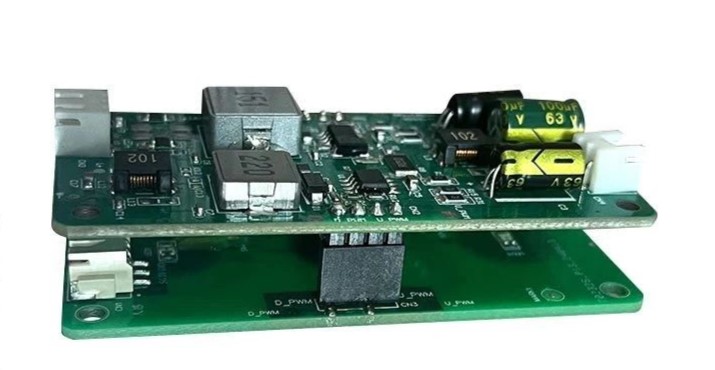
The control function itself can vary significantly from one product to another. A simple lighting controller may only need to switch an LED on and off, while a more advanced system may need to manage several independent channels. Brightness adjustment is one of the most common functions. PWM, or pulse-width modulation, is frequently used because it allows the controller to adjust the apparent brightness by changing the ratio between the on and off periods of the LED signal. This method can provide accurate control without requiring the LED to operate continuously at a reduced voltage. When several channels are controlled independently, the PCB must provide suitable signal paths and power distribution for each channel.
Color control introduces another layer of complexity. RGB lighting systems use different LED channels for red, green, and blue light, allowing the controller to create different colors by adjusting the output of each channel. Other lighting products use warm-white and cool-white LEDs to provide adjustable color temperature. In these designs, the controller needs to coordinate several outputs at the same time. The PCB layout must account for current requirements, component placement, grounding, connectors, and heat generated by the different channels. As the number of controlled outputs increases, the design becomes more dependent on careful PCB planning.
The microcontroller is often the central element of an intelligent lighting control system. It can receive information from buttons, sensors, communication modules, or another electronic system and then generate the appropriate control signals. Depending on the application, the controller may support timing functions, automatic brightness adjustment, fault detection, temperature monitoring, or different preset lighting modes. In a smart lighting product, the board may also include Bluetooth, Wi-Fi, or another communication interface so that the lighting system can be controlled remotely.
Power management is another major consideration. The LEDs may operate at a different voltage from the microcontroller and communication components, so the board may require voltage regulators or DC-DC conversion circuits. Protection components can also be used to help protect the electronics from electrical transients or abnormal operating conditions. When the LED load is relatively high, the PCB needs to provide sufficiently large current-carrying paths. Trace width, copper thickness, connector selection, and component ratings all become important. If the power path is not designed correctly, resistance and heat generation can increase, which may reduce the overall efficiency of the system.
The relationship between electrical and thermal design is particularly important in compact products. A power component that carries a large current can generate heat even when it is operating normally. If several such components are positioned close together, localized hot spots can develop. Copper areas can be used to spread heat, while thermal vias and other thermal structures may provide additional paths for heat transfer. The final solution also depends on how the PCB is mounted inside the product. A board connected directly to a metal housing may have a different thermal performance from the same board installed inside a plastic enclosure.
Automotive lighting is a good example of where these considerations come together. LEDs are now widely used for headlights, brake lights, turn signals, daytime running lights, interior lighting, dashboard indicators, and other vehicle functions. A modern automotive lighting system may need brightness control, multiple operating modes, diagnostics, communication with other electronic modules, and protection against changes in the vehicle's electrical environment. At the same time, the PCB may be exposed to vibration, temperature changes, humidity, and long operating periods. The circuit board therefore needs to be designed around both the electrical and environmental conditions of the vehicle.
Industrial lighting can have similar requirements. LED lighting used in factories, warehouses, machines, and automated equipment may need to interact with sensors, timers, PLCs, or other control systems. Instead of operating continuously at full brightness, a lighting system can be programmed to respond to movement or production conditions. This type of application makes the controller an important part of the overall automation system. The PCB may need to combine LED control with communication interfaces and sensor inputs while maintaining stable operation in an industrial environment.
Telecommunications equipment also makes extensive use of LED indicators. Network switches, routers, communication devices, and other equipment may use LEDs to show power status, data activity, connection status, or system faults. Although these LEDs may consume relatively little power compared with high-power lighting systems, they often operate continuously and are installed in compact electronic equipment where many other components are generating heat. A well-designed PCB can help keep the LED control circuitry compact while maintaining reliable electrical connections and suitable thermal conditions.
Medical equipment provides another interesting application for LED technology. LEDs are used in examination lights, surgical lighting, optical instruments, diagnostic equipment, and various other medical products. In these applications, stable illumination can be important because the lighting may directly affect the user's ability to inspect an object or perform a procedure. A controller may be used to adjust brightness, select lighting modes, or manage multiple LED channels. When high-intensity LEDs are involved, heat dissipation also becomes an important consideration because excessive temperature can affect the LED module and surrounding electronics.
The growing use of smart lighting is also changing what manufacturers expect from PCB suppliers. A lighting product may now include an LED controller, driver, sensor, wireless module, and power-management circuit within a relatively small enclosure. This creates challenges in both PCB fabrication and assembly. Components need to be positioned accurately, high-current circuits need appropriate copper structures, and sensitive control signals may need to be routed away from noisy power sections. At the same time, the board must remain practical to manufacture at the required production volume.
Surface-mount technology is widely used for these products because it allows electronic components to be placed closely together and supports automated assembly. Smaller components can help reduce board size, but high component density also makes manufacturing more demanding. Component spacing, solder pad design, thermal pads, and assembly tolerances all need to be considered before production. Some products may also require through-hole connectors or other mechanically strong components, creating a mixed-technology assembly. A manufacturer with PCB fabrication and PCBA capabilities can review these requirements together rather than treating the board and assembly as completely separate processes.
DFM, or Design for Manufacturing, can be particularly useful when an LED lighting project moves from prototype to volume production. A prototype may work correctly during laboratory testing but still contain manufacturing details that make large-scale production more difficult. Component availability, board panelization, copper distribution, soldering areas, component spacing, thermal structures, and testing requirements can all affect production yield. Reviewing these details before manufacturing begins can help reduce redesigns and unnecessary delays.
For smaller hardware companies, outsourcing PCB fabrication and assembly can also make the development process more flexible. Instead of maintaining their own production equipment, engineering teams can work with an external manufacturer for prototype boards, small-batch production, and larger orders. This allows internal engineers to concentrate on the lighting system and product development while the manufacturing partner handles PCB production, component assembly, inspection, and production support.
A reliable supplier can also provide useful feedback during the early design stage. For example, if a particular component is difficult to source, the manufacturer may suggest an alternative. If the current load requires a different copper thickness, this can be identified before production. If a thermal structure needs to be adjusted for assembly, an early DFM review can prevent problems later. These small improvements can become increasingly valuable as production quantities increase.
For companies developing LED lighting products, the right board structure ultimately depends on the product rather than on a single standard solution. A basic LED module may only require a simple LED PCB, while a smart lighting system may need a more sophisticated control board. High-power products may benefit from aluminum-based construction, while low-power control electronics may be more economical on FR-4. Some products may require separate LED and control boards, while compact designs may combine the two into one assembly.
As LED technology continues to move toward smarter and more connected products, the role of the PCB will continue to expand. An led controller pcb can provide the connection between the lighting components and the wider electronic system, allowing manufacturers to integrate brightness control, power management, sensing, communication, and automation into a single product. Good PCB design can also help manage heat, improve reliability, and make the final assembly easier to manufacture.
For engineers and product developers, choosing a suitable PCB manufacturing and assembly partner early in the development process can make a significant difference. Material selection, thermal design, electrical layout, component assembly, and manufacturability should be considered together rather than separately. With the right combination of PCB technology and manufacturing experience, LED lighting products can move more smoothly from an initial prototype to stable production while maintaining the performance and reliability expected from modern electronic lighting systems.