A Trustworthy PCB and Electronic Manufacturing Enterprise! Contact Us


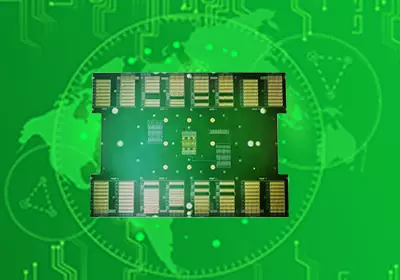
Quick turn pcb boards in modern electronic product development, have become essential tools for engineers and product teams looking to accelerate prototyping, fix design flaws fast, and meet tight project deadlines. As hardware iteration speeds up across consumer electronics, industrial IoT, and smart device industries, PCB manufacturing has split into two mainstream modes: fast expedited production and traditional standard mass production. Choosing the right production type directly affects project progress, R&D costs, and final product stability.
Many hardware developers struggle to tell the exact differences between expedited and regular PCB manufacturing, often picking the wrong service and wasting time or budget. If you need rapid design verification and flexible iteration, fast prototype PCB fabrication delivers the fastest turnaround and highest flexibility for early-stage electronic projects. Unlike rigid mass production workflows, fast PCB services simplify redundant manufacturing steps, prioritize order scheduling, and compress the entire production cycle from days to hours, perfectly matching the fast trial-and-error rhythm of product research and development.
To avoid project delays and unnecessary cost waste in PCB procurement, it is critical to fully understand the positioning and advantages of each production mode. Most mature commercial products eventually adopt standard manufacturing, but every successful hardware project starts with repeated prototype testing. Low volume quick turn PCB manufacturing supports small-batch customization and frequent design adjustments, making it the best choice for pre-production verification, sample display, and pilot testing. This is also the core reason why quick turn production remains irreplaceable in the electronic manufacturing industry.
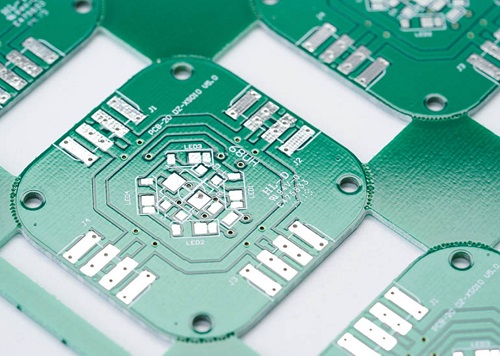
To start with, quick turn pcb boards are specially customized for time-sensitive R&D scenarios, with “speed and flexibility” as their core advantages. In traditional PCB production, the complete process flow, including engineering review, board cutting, patterning, etching, lamination, surface finishing, and final testing, usually takes one to three weeks. However, quick turn production optimizes the entire workflow mechanism. Manufacturers adopt priority order queues, streamlined engineering audits, and efficient assembly line scheduling, removing many standardized repetitive processes that are unnecessary for prototype boards. Under normal circumstances, qualified quick turn PCB orders can be completed within 24 hours to five working days, fully meeting urgent debugging, prototype delivery, and exhibition sample demands.
In terms of practical application advantages, quick turn PCB production boasts prominent flexibility and iteration efficiency. In the early stage of electronic product development, designers inevitably encounter circuit logic errors, component layout defects, and signal interference problems. Traditional standard production has long cycles, which means every modification requires waiting weeks for new boards, seriously delaying the overall project progress. In contrast, quick turn boards support frequent design tweaks and small-batch repeated production. Engineers can quickly verify new solutions after each revision, shorten the R&D cycle, and quickly lock the optimal design scheme. Although the unit production cost of quick turn boards is slightly higher than standard boards, it greatly reduces the time cost and trial-and-error cost of the entire project, bringing higher comprehensive economic benefits for R&D teams.
Standard PCB production, also known as normal or mass-production PCB manufacturing, focuses on scale efficiency and stable quality. This production mode is oriented to mature products that have completed prototype verification, with fixed design schemes and no need for subsequent large-scale modifications. The production cycle of standard PCBs is longer, usually ranging from one week to three weeks, because the factory needs to carry out standardized, full-process production and strict multi-link quality inspection to ensure the consistency of each batch of products. Standard production strictly follows complete industrial processes, including detailed DFM inspection, precise parameter calibration, aging testing, and finished product sampling inspection. Every link is designed for large-scale batch production, effectively reducing the unit cost through scale effects.
The core advantages of standard PCB boards lie in stable quality and low mass-production cost. After long-term standardized process polishing, mass-produced PCBs have extremely high product consistency, stable electrical performance, and strong environmental adaptability, which can fully meet the long-term continuous operation requirements of formal commercial products. For products with mature designs and large market demand, such as household appliances, consumer electronic terminals, and industrial control equipment, standard mass production can maximize cost advantages and help enterprises gain higher profit margins in market competition. In addition, standard boards have higher reliability in high-temperature resistance, anti-aging, and anti-interference performance, making them more suitable for formal market sales and long-term after-sales operation.
There are clear and practical differences between quick turn and standard PCBs in four core dimensions: manufacturing process, application scenarios, cost structure, and delivery cycle. In terms of manufacturing processes, quick turn PCB properly simplifies partial redundant testing and standardized procedures on the premise of ensuring basic electrical performance, pursuing production speed and iteration efficiency. Standard PCB retains all complete industrial processes and strict quality control standards, taking product stability and batch consistency as the primary goal.
In terms of application scenarios, quick turn pcb boards are mainly used in the early R&D stage of products, including design verification, functional debugging, sample production, small-batch pilot production, and emergency order supplementation. They are widely used in startup project development, new product trial production, and urgent equipment maintenance scenarios. Standard PCBs are completely different, mainly serving the formal mass production stage of mature products, meeting large-scale market delivery needs, and suitable for long-life-cycle electronic products with stable design and fixed functions.
In terms of cost structure, the unit price of quick turn PCB is relatively higher. Due to priority scheduling, flexible small-batch production, and process optimization for speed, factories cannot form scale effects, resulting in higher single-board production costs. However, it can save a lot of R&D time cost and trial-and-error cost for enterprises. Standard PCB relies on large-scale batch production to dilute fixed production costs, so the more the production quantity, the lower the single-board cost, which is more in line with the cost demand of formal commercial mass production.
In terms of delivery time, the gap between the two modes is the most intuitive. Quick turn PCB can complete production and delivery within one to five working days, supporting rapid iteration and emergency demand response. Standard PCB requires sufficient time for process arrangement, quality testing, and batch production, with a delivery cycle of 7 to 21 working days, which is not suitable for urgent projects and early-stage rapid iteration scenarios.
Many people have misunderstandings about the quality of quick turn PCBs, thinking that fast production means cutting corners and unstable performance. In fact, regular manufacturers’ quick turn products fully meet basic industrial standards and can perfectly meet the needs of prototype debugging and small-batch trial production. The essential difference between the two is not quality level, but different process priorities and application positioning. Quick turn production prioritizes speed and iteration flexibility, while standard production prioritizes batch stability and cost optimization. Designers only need to select the corresponding production mode according to the project stage, and there is no absolute distinction between good and bad.
Reasonable selection of PCB production modes is an important guarantee to improve product development efficiency and control project costs. In the early stage of new product research and development, when the circuit scheme is not yet mature and repeated modification and debugging are needed, choosing quick turn PCB can greatly shorten the iteration cycle, quickly verify design feasibility, and seize market opportunities. When the product design is fully verified, the function is stable, and mass market sales are ready, switching to standard mass production PCB can maximize cost advantages and ensure long-term stable product quality.
In the fast-updating electronic industry, matching the correct PCB production mode according to different project stages can effectively avoid resource waste and progress delays. Whether for startup innovation projects, enterprise new product iteration, or emergency equipment maintenance, quick turn pcb boards provide efficient and flexible production solutions for time-sensitive circuit board demands, becoming an indispensable auxiliary tool for modern electronic hardware research and development and production.