A Trustworthy PCB and Electronic Manufacturing Enterprise! Contact Us


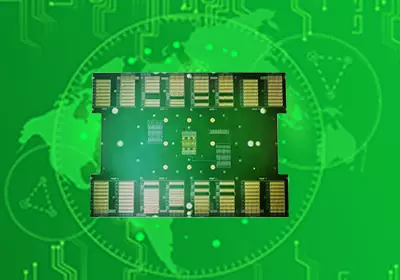
Single sided pcbs are the most fundamental, widely used printed circuit board type in the consumer electronics industry, renowned for their simple structure, affordable pricing, and mature manufacturing technology. Unlike double-sided or multilayer PCBs, these circuit boards feature copper tracing on only one side and pure insulating substrate on the opposite side, delivering stable basic electrical connection for countless everyday electronic devices. The extreme cost-efficiency and high production compatibility make single sided pcbs the dominant option for mass-produced low-to-medium-end electronic products, covering household appliances, LED lighting, portable consumer gadgets, and basic power supply equipment. For electronics manufacturers and PCB procurement teams, mastering the material standards, production workflows, application scenarios, and performance limitations of single sided pcbs is essential for optimizing product cost control and ensuring stable mass production.
What Are Single Sided PCBs? Basic Structure and Core Specifications
Also known as single-layer copper-clad circuit boards, single sided pcbs adopt a straightforward structural design that distinguishes them from all complex PCB types. The board consists of two core layers: a conductive copper foil layer for circuit routing on one side, and a non-conductive epoxy glass insulating substrate on the other side. This one-sided conductive structure is the key reason for their simple manufacturing process and low material consumption, laying the foundation for large-scale industrial production.To adapt to diverse consumer electronic product requirements, single sided pcbs support customizable board thickness with standard mainstream specifications including 0.8mm, 1.0mm, 1.2mm, 1.6mm, and 2.0mm. Beyond these common sizes, manufacturers can produce ultra-thin or extra-thick customized single sided pcbs for special industrial and household equipment needs. Each thickness specification corresponds to different mechanical strength and load-bearing capacity, matching the structural assembly requirements of different electronic products.
In terms of material grade, almost all commercial single sided pcbs adopt FR4 flame-retardant substrate, the industry’s universal flame-retardant level 4 standard. This material effectively prevents circuit combustion and improves the safety of household and consumer electronic devices. Strict material compliance is mandatory for mass production: all substrates, copper foil, prepreg, and chemical additives must meet international and domestic certification standards including UL certification, RoHS hazardous substance restriction regulations, and CCL industry specifications. These standards strictly limit harmful substances such as bromine and halogen components, ensuring the finished single sided pcbs are environmentally friendly, safe, and compliant for global market sales.
Core Advantages of Single Sided PCBs for Mass Consumer Markets
Ultra-Low Production Cost for Cost-Sensitive Products
Cost advantage is the most prominent competitive edge of single sided pcbs, and also the core reason for their overwhelming popularity in consumer electronics. Compared with double-sided and multilayer PCBs, single sided pcbs consume far less copper foil and auxiliary materials, with fewer production processes and lower equipment and labor costs. Without complex procedures such as hole metallization, layer pressing, and inner layer etching, the overall production cost is 30% to 50% lower than double-sided PCBs, and even more competitive against high-layer multilayer boards.
For mass-produced civilian products with low profit margins, including small household appliances, basic LED lighting, and portable consumer electronics, the low-cost attribute of single sided pcbs is irreplaceable. Manufacturers can effectively control BOM costs while maintaining basic circuit performance, ensuring product market competitiveness in the fiercely saturated consumer electronics market.
Simple Manufacturing Process and Fast Mass Production
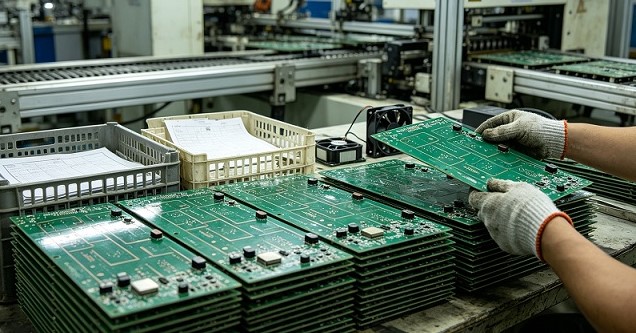
The structural simplicity of single sided pcbs translates directly to streamlined automated production workflows. Modern PCB factories rely on fully automated production lines to complete single sided pcbs processing with high efficiency and high yield. The entire production process is standardized and mature, avoiding complex process debugging and low-yield risks associated with high-end circuit boards.
The complete production flow of single sided pcbs follows a fixed and efficient sequence. First, professional technicians cut the qualified standard substrate according to product design dimensions. After precise cutting, automated cleaning equipment removes surface dust, oil stains, and impurities to ensure flat and clean board surface for subsequent circuit transfer. Next, the designed circuit pattern is transferred to the PCB surface through film exposure and ink screen printing processes. After etching treatment, the redundant copper foil is removed, leaving accurate and complete conductive circuit traces. Finally, protective solder mask ink is printed on the circuit surface and baked and cured to form an anti-oxidation, anti-corrosion protective layer, completing the finished single sided pcbs production.
The entire process requires minimal manual intervention, with short production cycles and high delivery efficiency, fully meeting the urgent mass production needs of consumer electronics factories. The mature process also ensures stable product consistency, reducing defective rates and after-sales maintenance costs.
Stable Basic Performance and High Practicality
Although single sided pcbs are simple in structure, their basic electrical performance, mechanical stability, and environmental adaptability fully meet the operating requirements of ordinary consumer electronic products. The FR4 substrate features good insulation, flame retardancy, and chemical corrosion resistance, effectively protecting internal circuits from external moisture, static electricity, and conventional chemical erosion. The standardized copper foil routing ensures stable electrical signal transmission without frequent short circuits or open circuit failures.
In terms of mechanical performance, single sided pcbs have sufficient hardness and structural stability to adapt to daily vibration, extrusion, and conventional temperature changes of household equipment. They can maintain long-term stable operation in indoor conventional environments, perfectly matching the service life requirements of most consumer electronic products (1-2 years of conventional service cycle).
Main Application Scenarios of Single Sided PCBs in Consumer Electronics
Single sided pcbs occupy the largest market share in the low and medium-end consumer electronics and household appliance fields, with extremely wide application coverage. Almost all simple functional electronic products with low circuit complexity and single signal transmission rely on single sided pcbs as the core circuit carrier. Its low cost, large output, and stable performance make it the preferred circuit board for civilian mass-market products.
Household Appliance Industry
Small and medium-sized household appliances are the largest application market for single sided pcbs. Common civilian equipment including household fans, humidifiers, mini rice cookers, electric kettles, and small kitchen appliances all adopt single sided pcbs as the internal control circuit board. These household appliances have single functional logic, simple circuit design, and no high-frequency or high-precision signal transmission requirements, making single sided pcbs completely capable of meeting operational needs.
Household appliance products feature huge market demand and fierce price competition, so cost control is the core of enterprise profitability. The ultra-low cost of single sided pcbs helps household appliance manufacturers reduce overall product pricing, while mature mass production technology ensures sufficient supply capacity to support the continuous shipment of civilian household appliances.
LED Lighting Industry
LED lighting products are another major application scenario for single sided pcbs, including ordinary indoor LED bulbs, lamp panels, strip lights, and low-power lighting fixtures. LED lighting circuits have simple parallel and series connection logic, low load requirements, and no complex routing design, which perfectly fits the structural characteristics of single sided pcbs.
The lighting industry is a typical mass-production industry with extremely high requirements for cost control and delivery speed. Single sided pcbs not only reduce the production cost of LED lighting products but also ensure the stability of lamp circuit operation, avoiding common faults such as light flicker and circuit burnout. At present, more than 80% of civilian low-power LED lighting products in the market use single sided pcbs.
Low-Power Power Supply Products
Various low-end civilian power supply equipment, including mobile phone chargers, power adapters, switching power supplies for small equipment, and emergency power supplies, mostly use single sided pcbs. These power supply products have fixed circuit modes, single functional requirements, and low operating power, and the basic insulation and conductive performance of single sided pcbs can fully meet operational standards.
Civilian power supply products have huge market demand and high iteration speed. The fast production cycle and low cost of single sided pcbs help power supply manufacturers quickly launch new products and occupy market share, becoming an indispensable core material in the low-power power supply industry.
Ordinary Consumer Electronic Gadgets
In addition to household appliances and lighting, single sided pcbs are also widely used in various daily consumer electronic products, including electronic toys, remote controls, small sensors, timing devices, and portable mini electronic products. These products have low circuit complexity, short service life cycle, and sensitive cost control, which are highly compatible with the performance and cost characteristics of single sided pcbs.
Material and Process Standards for High-Quality Single Sided PCBs
Although the production process of single sided pcbs is simple, qualified products must strictly abide by industry material standards and process specifications to avoid quality problems such as poor insulation, circuit falling off, and short circuit failure. Material selection is the foundation of product quality: regular manufacturers must select FR4 flame-retardant substrates that pass UL, RoHS, and CCL certifications, strictly control halogen, bromine, and other harmful substances, and use high-purity copper foil and qualified prepreg and chemical additives to ensure product environmental protection and safety.
In the production process, standardized automated operations must be implemented for each link. Substrate cutting must ensure accurate size and flat surface without burrs. Surface cleaning must completely remove impurities to avoid affecting the adhesion of ink and circuit layers. The film exposure and screen printing links need precise parameter control to ensure clear and complete circuit patterns without deviation or missing lines. The etching process must accurately remove redundant copper foil to avoid short circuit caused by residual copper. The final solder mask curing temperature and time must be strictly controlled to ensure firm ink adhesion and effective circuit protection.
After production is completed, finished products need to pass strict quality inspection, including appearance inspection, electrical performance testing, insulation testing, and flame retardant testing, to ensure that all indicators meet industry standards before delivery to electronic manufacturers. Electronic factories will weld electronic components, resistors, capacitors, and structural parts on qualified single sided pcbs to complete PCBA processing, and finally assemble the PCBA board into finished electronic products to complete the entire industrial chain production.
Market Development Trend of Single Sided PCBs
With the continuous expansion of the global consumer electronics and household appliance market, the market demand for single sided pcbs is maintaining steady and rapid growth. Unlike high-end multilayer PCBs that are limited by high technical thresholds and narrow application scenarios, single sided pcbs rely on their cost advantages, mature processes, and wide compatibility to maintain strong market vitality in the civilian electronics field.
At present, the single sided pcbs manufacturing industry has entered a fully mature stage. Most PCB factories have realized full-process automated production, with continuously improved production efficiency, reduced defective rates, and further optimized unit production costs. The standardized production process makes the product quality of single sided pcbs more stable, which can meet the large-scale and standardized procurement needs of major household appliance and electronics brands.
In the future, driven by the upgrading of civilian consumer electronics and the expansion of the smart home market, the demand for small household appliances, smart lighting, and low-power smart sensors will continue to rise, which will further drive the market increment of single sided pcbs. Although single sided pcbs belong to low-end circuit board products, their irreplaceable cost performance and wide application scenarios ensure long-term stable market demand.
Limitations and Applicable Boundaries of Single Sided PCBs
While single sided pcbs have prominent advantages in the consumer market, they also have obvious performance limitations, which also define their applicable product boundaries. Due to the single-sided routing design, the circuit density of single sided pcbs is low, and it is impossible to realize complex circuit crossing and multi-functional integrated design. Therefore, they cannot be used in high-precision, high-frequency, and high-integration electronic equipment such as smartphones, computers, and automotive high-precision electronic systems.
In addition, the mechanical strength and thermal stability of single sided pcbs are weaker than multilayer boards, and they are not suitable for high-temperature, high-vibration, and harsh industrial environments. Their service life is relatively limited, generally matching the 1-2 year conventional service cycle of ordinary consumer electronics, and cannot meet the long-term stable operation requirements of industrial-grade and medical-grade equipment.
For electronics manufacturers, rational selection of circuit board types according to product positioning is the key to cost optimization and performance matching. For low-complexity, mass-produced civilian consumer products, single sided pcbs are the best cost-performance choice; for high-end intelligent equipment with complex functions, it is necessary to match double-sided or multilayer PCBs to meet performance requirements.
Final Conclusion
As the most basic and widely used circuit board type in the electronic manufacturing industry, single sided pcbs have always been the core force supporting the development of the consumer electronics and household appliance industry. With simple structure, strict compliant materials, mature automated production processes, ultra-low manufacturing costs, and extremely wide application scenarios, they occupy an irreplaceable core position in the mass consumer electronics market.
From LED lighting, low-power power supplies to various small household appliances and daily consumer electronic gadgets, single sided pcbs always maintain excellent practicality and cost advantages. With the continuous expansion of the global smart home and civilian electronics market, the process technology of single sided pcbs will continue to be optimized, and the application fields will be further expanded. For PCB procurement engineers and electronic product developers, fully understanding the material characteristics, process standards, and application boundaries of single sided pcbs can effectively help enterprises control costs, stabilize product quality, and improve market competitiveness in the fierce consumer electronics market.