A Trustworthy PCB and Electronic Manufacturing Enterprise! Contact Us


In PCB manufacturing, copper-clad laminate (CCL) is the foundation everything else is built on — it's both the "bedrock" of the circuit and the "skeleton" that holds the components. The designations we throw around casually — FR-1, FR-2, FR-3, FR-4 — are actually grade codes defined by NEMA (the National Electrical Manufacturers Association) in the US, where "FR" stands for Flame-Retardant. An FR1 PCB board and an FR-4 PCB board might sound like minor variations on the same theme, but they differ substantially in raw materials, performance, cost, and application. Let's walk through the evolution from FR-1 to FR-4 and clear up exactly what separates them.
FR-1: Phenolic Paper Laminate — the "Paper Board"
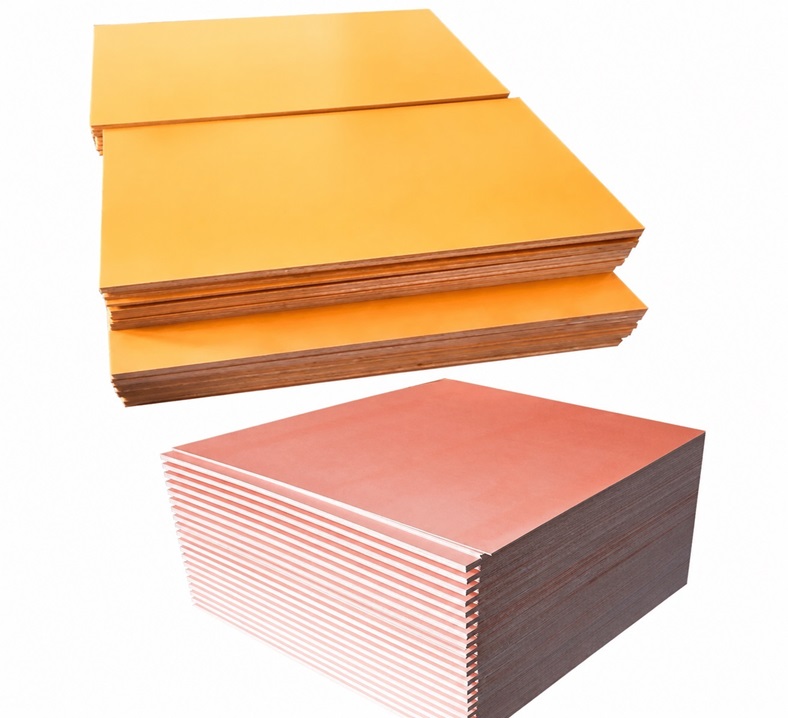
FR-1 is the most common flame-retardant grade among paper-based laminates, built from bleached, resin-impregnated wood-pulp paper reinforced with modified phenolic resin, then hot-pressed together with electrodeposited copper foil. It has a non-flame-retardant sibling called XPC (typically marked in blue text on the board), while FR-1 is marked in red to distinguish it. The nickname "paper board" is fitting — the material looks and feels like hardboard or Bakelite, in a brownish-yellow or dark red color, and can be die-punched into shape in a single stamping operation, which makes it fast and cheap to process.
FR-1 remains widely used today, and it's the default material for a lot of cost-sensitive consumer electronics. Think of it as the "economy" option — well suited to simple circuits that don't need top-tier performance: remote controls, electronic toys, calculators, microwave ovens, rice cookers, and similar low-complexity control boards. For high-volume products where stability and durability requirements are modest and the operating environment isn't extreme, an FR1 PCB board is often the single biggest lever for controlling unit cost.
FR-2: The Upgraded Paper-Phenolic Board
FR-2 also uses phenolic resin as its binder and wood-pulp fiber paper as reinforcement, but delivers slightly better electrical and mechanical performance than FR-1. It's more common in consumer electronics sold into European and North American markets, while Asian manufacturers tend to favor FR-1 — an interesting regional split in technology preference more than a difference in end-product design, since the products built on each material end up broadly similar.
FR-3: Paper-Epoxy — the Ceiling for Paper-Based Boards
FR-3 is a bit of an outlier: it still uses cotton or wood-pulp paper as reinforcement, but swaps phenolic resin for epoxy resin instead. It's the highest-performing grade among paper-based laminates, with better dielectric properties and mechanical strength than both FR-1 and FR-2 — at a correspondingly higher cost.
In practice, FR-3 covers most of the same applications as FR-1 and FR-2, but it's also used in circuits that need to withstand humidity or higher voltage — think heaters, refrigeration units, washing machines, and other white-goods applications. FR-3 has historically been more common in European and North American markets, though its market share is steadily being replaced by more cost-effective composite laminates like the CEM series.
FR-4: Epoxy Glass Laminate — Today's Mainstream Standard
FR-4 isn't a material name so much as a grade designation — it stands for "flame-retardant epoxy resin glass-fiber laminate." Strictly speaking, it's a specific flame-retardant grade within the NEMA standard: "FR" for flame-retardant, "4" for the particular formulation. FR-4 uses E-glass woven fabric as reinforcement and bisphenol-A epoxy resin as the binder, combining flame retardancy (UL94 V-0 rated), high mechanical strength, strong electrical insulation, and good processability.
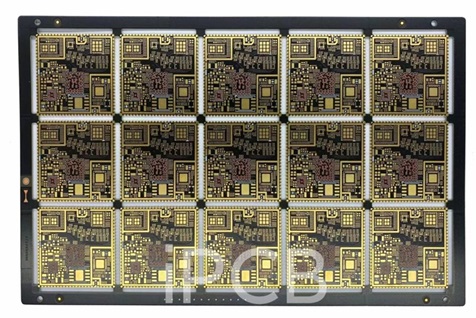
The fundamental difference between paper-based laminates (FR-1/2/3) and glass-fiber laminates (FR-4) comes down to one thing: reinforcement material moving from organic fiber to inorganic glass fiber. That shift is transformative — woven glass fabric has a coefficient of thermal expansion (CTE) far lower than paper fiber, so dimensions barely shift under heat; it doesn't absorb water, dramatically improving moisture resistance; and its tensile strength exceeds 400MPa, far beyond anything paper-based material can achieve.
FR-4 didn't displace paper laminates and CEM composites by chasing the absolute best performance — it won by hitting the sweet spot between performance and cost. Paper laminates fall short on heat resistance, water absorption, and mechanical strength, and can only be made as single-sided boards. High-performance specialty laminates — polyimide (PI), PTFE — solve those problems but cost 5–10x more than FR-4 and are much harder to process. FR-4 sits squarely in the middle: good enough to cover more than 90% of electronic applications, at a fraction of the cost of specialty materials. That "good enough, and affordable" positioning is what made FR-4 close to an industry standard.
Beyond FR-4: FR-5, FR-7, and FR-8
FR-5 uses the same glass-epoxy system as FR-4 but with meaningfully better heat resistance — Tg (glass transition temperature) of 170°C or higher, giving better dimensional stability and strength at elevated temperature. It's typically used in servers, aerospace, and other high-reliability applications.
FR-7 and FR-8 use high-performance resins like polyimide, capable of continuous operation above 220°C and strong resistance to extreme temperature swings and harsh environments — the most robust of the group. That reliability comes at a steep cost, so these grades are reserved for military, aerospace, and deep-well exploration applications.
For low-cost, single-sided boards, FR-1 remains the default choice. For general-purpose double-sided or multilayer boards, FR-4 is the standard configuration. High-temperature, high-reliability environments call for FR-5, and extreme operating conditions call for FR-7/FR-8. The right material is simply the one that matches the application — and for most of the industry, that balance still points to FR-4 as the mainstream choice, with the FR1 PCB board continuing to hold its ground wherever cost is the deciding factor.