A Trustworthy PCB and Electronic Manufacturing Enterprise! Contact Us


In PCB manufacturing, both immersion gold (ENIG) and electroplated gold are widely used surface finishing processes designed to protect exposed copper surfaces from oxidation, improve solderability, and enhance long-term reliability, however, despite their similar visual appearance and the fact that both involve a gold layer on the PCB surface, these two processes are fundamentally different in terms of chemical principle, structural formation, and functional application, which means they are not interchangeable and must be selected carefully according to the specific engineering requirements of the final product.
1. Fundamental Process Difference
1.1 Electroplated Gold (Electrochemical Deposition Process)
Electroplated gold, also commonly referred to as hard gold, soft gold, or electroplated nickel/gold, is based on an electrochemical deposition mechanism in which gold ions and nickel ions dissolved in a plating bath are deposited onto the PCB surface through the application of an external electric current, meaning that the PCB itself must be conductive in order to complete the plating process, and as a result, the metal layer is built up gradually through controlled electrical reactions, forming a relatively thick and mechanically robust gold coating.
1.2 Immersion Gold (ENIG Chemical Displacement Process)
Immersion gold, also known as ENIG (Electroless Nickel Immersion Gold), is a purely chemical displacement process in which a layer of nickel is first deposited on the copper surface, after which a very thin layer of gold is formed through a chemical exchange reaction without the need for external electrical current, meaning that the entire process relies on chemical activity rather than electrical conduction, which allows it to be applied after solder mask processing and makes it more suitable for fine-pitch and high-density PCB applications.
2. Structural Composition Difference
2.1 Electroplated Gold Structure (Mechanical + Contact-Oriented Design)
The typical structure of electroplated gold consists of a copper base layer, a nickel barrier layer, and a relatively thick gold layer on top, where the nickel layer acts as both a diffusion barrier and an adhesion enhancement layer, while the gold layer itself provides the primary conductive and contact interface, resulting in a structure that is primarily designed for mechanical durability and repeated electrical contact performance rather than soldering optimization.
2.2 ENIG Structure (Soldering-Oriented Surface System)
In contrast, the ENIG structure also consists of copper and nickel layers, but the gold layer is extremely thin, typically in the range of 1–5 microinches, meaning that the gold layer primarily serves as a temporary protective layer preventing nickel oxidation, while the actual solder joint formation during assembly is achieved through interaction with the nickel layer, making ENIG fundamentally a solderability-driven surface finish rather than a contact-driven one.
3. Process Characteristics and Performance Behavior
3.1 Characteristics of Electroplated Gold
(1) Thick and Hard Gold Layer with High Wear Resistance
Electroplated gold typically forms a much thicker coating compared to immersion gold, often ranging from 10 to 50 microinches or more, and in many industrial applications, cobalt or nickel is added to increase hardness, resulting in a “hard gold” layer that exhibits excellent wear resistance, making it highly suitable for high-frequency insertion and extraction environments such as edge connectors and gold fingers.
(2) Requires Electrical Conduction During Manufacturing
Because electroplating depends on electrical current, the process must be completed before solder mask application, since any insulating layer would block electrical conduction and prevent metal deposition, which means electroplated gold is inherently a pre-solder-mask surface finishing process with strict process sequencing requirements.
3.2 Characteristics of ENIG
(1) Thin but Highly Uniform Gold Layer
The gold layer in ENIG is extremely thin but chemically uniform, resulting in a very smooth and planar surface finish that is especially advantageous for fine-pitch components and high-density interconnect (HDI) designs, where surface flatness plays a critical role in solder paste printing accuracy and assembly yield.
(2) Independent of Electrical Current (Post-Solder-Mask Process)
Since ENIG is based on a chemical displacement reaction rather than electrochemical deposition, it does not require electrical conduction, which allows it to be applied after solder mask processing and makes it highly flexible in modern PCB manufacturing flows.
4. Solderability Differences
4.1 ENIG Provides Superior Soldering Performance
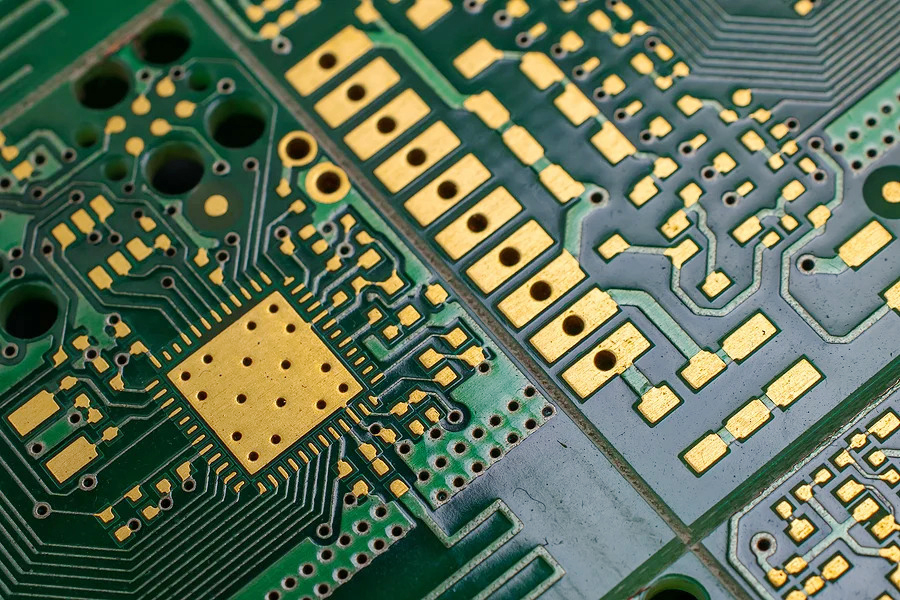
Due to its extremely thin gold layer, ENIG allows the gold to dissolve rapidly during the reflow soldering process, enabling the underlying nickel layer to form a stable intermetallic bond with solder, resulting in strong, reliable, and consistent solder joints, which is why ENIG is widely used in BGA, QFN, and high-density SMT applications.
4.2 Electroplated Gold May Affect Solder Joint Formation
In contrast, electroplated gold, due to its relatively thick gold layer, may not fully dissolve during soldering, which can interfere with solder wetting and potentially lead to the formation of brittle intermetallic compounds such as AuSn4, thereby reducing long-term solder joint reliability, especially under thermal cycling conditions.
5. Wear Resistance and Contact Performance
5.1 Electroplated Gold Is Ideal for Mechanical Contact
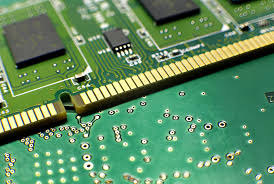
Because of its thickness and hardness, electroplated gold provides excellent wear resistance and can withstand repeated mechanical friction and insertion cycles, making it the preferred choice for applications such as edge connectors, memory card fingers, and industrial plug-in interfaces where stable electrical contact over long service life is required.
5.2 ENIG Is Not Suitable for Mechanical Wear
Since the gold layer in ENIG is extremely thin, it cannot withstand repeated mechanical abrasion, and prolonged insertion cycles will eventually expose the underlying nickel layer, leading to oxidation and increased contact resistance, which makes it unsuitable for connector-type applications.
6. Electrical Behavior and Material Influence
6.1 Electroplated Gold Contains Nickel Magnetic Influence
Because electroplated gold structures include a nickel layer, and nickel exhibits weak magnetic properties, this may introduce slight electromagnetic influence in certain high-frequency or RF-sensitive applications, requiring careful consideration in signal integrity design.
6.2 ENIG Provides Cleaner Signal Path Characteristics
Although ENIG also includes a nickel layer, the overall structure is more uniform and the gold layer is extremely thin, meaning that signal conduction primarily occurs through the copper layer, resulting in more stable signal integrity in high-speed and high-frequency applications.
7. SMT Assembly and Manufacturing Yield Differences
7.1 ENIG Improves SMT Yield
Due to its flat and clean surface finish, ENIG provides excellent solder paste wettability, which improves printing accuracy and reflow consistency, especially in fine-pitch components where assembly tolerance is extremely tight.
7.2 Electroplated Gold May Reduce Wettability
Electroplated gold surfaces may exhibit micro-roughness and thicker gold coverage, which can slightly reduce solder wettability and affect joint consistency in precision SMT processes.
8. Application Summary
8.1 ENIG Application Areas
ENIG is primarily used in applications requiring high soldering reliability and fine-pitch assembly, such as BGA packages, HDI boards, high-speed communication PCBs, and LED control boards where signal integrity and solder joint consistency are critical.
8.2 Electroplated Gold Application Areas
Electroplated gold is mainly used in applications requiring mechanical durability and repeated electrical contact, such as edge connectors, memory card interfaces, graphics card fingers, and industrial plug-in systems where wear resistance is the dominant requirement.
9. Conclusion
Although ENIG and electroplated gold are both PCB surface finishing technologies involving gold deposition, they differ fundamentally in process mechanism, structural composition, and functional purpose, where ENIG is primarily optimized for solderability and signal integrity, while electroplated gold is designed for mechanical durability and contact reliability, meaning that neither process is universally superior, and the correct selection must always be based on the specific application scenario rather than cost or appearance alone.