A Trustworthy PCB and Electronic Manufacturing Enterprise! Contact Us


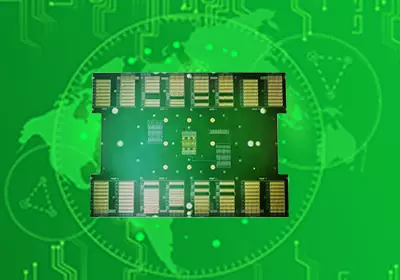
PCB reverse engineering refers to the process of analyzing an existing circuit board to extract its complete design information—including schematics, PCB layout, layer stackup, and Bill of Materials (BOM)—with the ultimate goal of replicating a circuit board that is functionally identical to the original.
Reverse Engineering Process:
The reverse engineering processes for bare PCBs and populated PCB Assemblies (PCBAs) differ slightly, though the overall steps remain similar.
Recording Key Information:
For PCBAs, it is essential to record detailed information regarding the components—such as model parameters and precise placement coordinates. Before desoldering begins, the components are scanned or photographed to ensure that all component markings (particularly those on diodes and transistors) are clearly visible and unobstructed.
Component Removal:
Components are desoldered in a specific sequence (typically resistors and capacitors first, followed by ICs), and any missing or misplaced parts are carefully documented. Once the desoldered components have cooled, they are measured using tools such as bridge circuits to ensure accurate readings.
Surface Cleaning:
Cleaning agents are used to remove residual solder and debris, ensuring the PCB is in optimal condition for the subsequent steps.
Image Adjustment and Verification:
Scanned images of the PCB are enhanced and adjusted to improve contrast and clarity. The images are then converted into a format that can be interpreted by design software for further analysis.
PCB File Creation:
Design software (such as Protel) is used to trace the top and bottom layers of the PCB and to place components onto the schematic, thereby reconstructing the PCB layout.
Verification and Testing:
The generated PCB layout is compared against the original layout to verify consistency, followed by functional testing of the circuit.
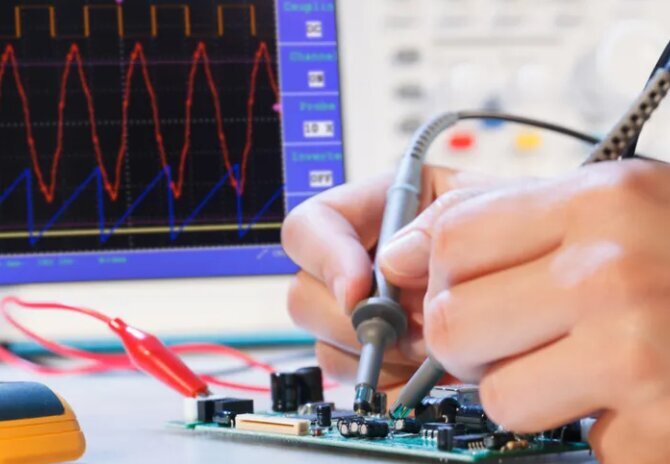
PCB reverse engineering
Factors to Consider When Performing PCB Reverse Engineering
1. Prior to commencing PCB reverse engineering, it is crucial to create a record or backup of the original board. This ensures that during the subsequent optimization phase—should any issues arise during manufacturing—the project can be re-processed using the original template. Without such a backup, a single error could cause the entire downstream project to fail, resulting in significant repercussions.
2. If there are additional requirements for the PCB reverse engineering project—such as the need for a Bill of Materials (BOM)—the PCB design files must be configured according to the standards established at the outset. This prevents errors in the BOM table that could compromise the usability of the final product. Furthermore, when desoldering components, meticulous attention must be paid to the polarity of each component to avoid incorrect placement during the reassembly phase.
3. Before duplicating a PCB, it is essential to measure and record the board's dimensions. This ensures that the scanned board image aligns perfectly with the original PCB's physical size, thereby facilitating component installation during later stages and preventing issues such as component misalignment or incompatibility. Furthermore, the image produced by the scanner must be of high clarity to ensure that subsequent component identification and verification processes are as convenient and efficient as possible.
Case Study
Consider, for example, an industrial control board—a double-sided PCB featuring a variety of interface chips and analog circuits. During a maintenance operation, the original design files for this board were lost. Reverse engineering was successfully completed by following these steps:
High-resolution photographs were taken of both sides of the PCB to document the component layout.
X-ray imaging was employed to capture information regarding the internal routing layers.
The circuit network was reconstructed using CAD software.
Based on the specific models of the components, the circuit's functional logic was deduced, allowing for the step-by-step creation of a schematic diagram.
A prototype board was fabricated to undergo functional verification, thereby confirming the accuracy of the reverse-engineered design.
Ultimately, the design information for this PCB was successfully recovered and subsequently utilized for the production of replacement boards as well as for the development of upgrade solutions.
PCB reverse engineering is a comprehensive discipline that integrates electronic engineering techniques, materials analysis, and computer-aided design. It not only assists enterprises in resolving issues related to missing design documentation, product maintenance, and compatibility development, but also fosters learning and innovation within the field of electronics technology. As the complexity of PCBs continues to increase, reverse engineering techniques will continue to evolve; by integrating non-destructive testing methods, intelligent analysis software, and simulation technologies, the process of PCB reverse engineering will become even more efficient, precise, and reliable.