A Trustworthy PCB and Electronic Manufacturing Enterprise! Contact Us


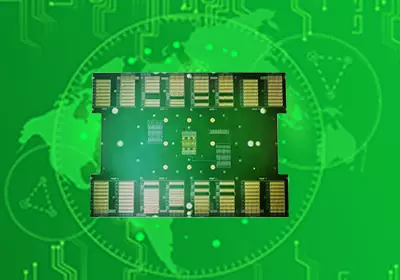
A fiberglass PCB board owes its widespread use to a simple but effective pairing: the mechanical strength of woven glass fabric combined with the electrical insulation and processability of epoxy resin. Together, these two materials form the FR-4 laminate — a base material that remains the default, industry-standard choice for the vast majority of electronic products manufactured today, from consumer devices to industrial control systems.
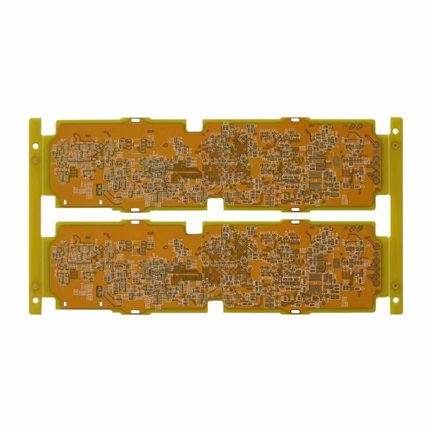
Fiberglass Does More Than Add Strength
When people hear "fiberglass PCB," the first assumption is usually that the glass fabric is there purely to make the board stronger. Mechanical strength is part of the story, but it's not the main reason fiberglass matters. The more critical role it plays is controlling dimensional stability — keeping the board's size and shape consistent throughout manufacturing and over its service life.
Any epoxy fiberglass PCB goes through lamination, drilling, copper plating, soldering, and repeated thermal cycling, all of which subject the material to significant heat and mechanical stress. Resin on its own, without reinforcement, tends to expand, shrink, or deform noticeably under these conditions. Woven fiberglass acts as the board's structural skeleton, holding the overall geometry in place. This matters enormously for multilayer boards in particular — even a few microns of dimensional shift can throw off layer-to-layer registration, leading to connection failures or unpredictable electrical performance down the line.
Why Fiberglass Needs Epoxy Resin to Function
On its own, woven glass fabric can't function as a fiberglass PCB board — it needs epoxy resin to act as both the binding agent and the insulating medium. The two materials have clearly divided roles: fiberglass provides mechanical support and dimensional stability, while epoxy resin binds the glass fabric into a solid, cohesive laminate and provides the electrical insulation needed to separate circuit traces and prevent leakage current. Combined with copper foil to form the conductive layers, this three-part system — glass fabric, resin, and copper — integrates cleanly with the mature, well-established PCB manufacturing process, requiring no specialized processing from fabrication through assembly. It's this combination that strikes a genuinely practical balance between performance, manufacturability, and cost — capable of supporting complex multilayer designs at a fraction of the cost and process complexity of specialty substrate materials.
What Makes FR-4 the Industry Standard
FR-4's dominance isn't the result of excelling in any single performance metric — it's the result of having no significant weaknesses across the board. It offers adequate rigidity for structural support, reliable insulation performance, thermal resistance compatible with standard wave soldering and reflow soldering processes, and consistent, repeatable results across multilayer builds. On top of that, raw material supply is abundant and pricing is transparent, giving it a clear cost advantage in both production and procurement. For the overwhelming majority of applications, switching to ceramic, PTFE, or other specialty substrates without a genuine technical requirement usually just adds cost without delivering a matching performance benefit. Unless a design has specific electrical or thermal requirements that FR-4 can't meet, it remains the safest and most economical default choice.
Where Standard Fiberglass PCBs Fit Best
This class of substrate sees the broadest use in industrial control systems, consumer electronics, general-purpose power supplies, standard communications equipment, automotive control modules, and various sensing and monitoring devices. What these applications have in common is a need for stable, reliable performance and manufacturability at a controlled cost — without requiring the ultra-low dielectric loss needed for high-frequency circuits or the high thermal conductivity needed for high-power applications. FR-4's overall property set lines up well with exactly this kind of requirement.
Where FR-4 Reaches Its Limits
Despite its versatility, FR-4 isn't a one-size-fits-all solution. In high-frequency RF and microwave circuits, FR-4's dielectric loss increases noticeably as frequency rises, degrading signal integrity — these applications call for low-loss specialty laminates instead. In high-power LED and high-power power-supply modules, FR-4's thermal conductivity isn't sufficient to dissipate heat quickly enough, which can lead to component overheating; aluminum-based substrates or other metal-core PCB (MCPCB) constructions are a better fit here. And in applications requiring sustained high-temperature operation or military-grade long-term reliability, standard FR-4's thermal limits and long-term stability fall short, calling for high-Tg (glass transition temperature) laminates instead — this is typically where the FR-4 vs ceramic substrate comparison comes up, since ceramic offers the thermal headroom FR-4 can't match. The core principle for material selection should always start from the design's actual electrical, thermal, and mechanical requirements — not the assumption that all fiberglass-based substrates perform identically.
A fiberglass PCB board remains the industry standard because glass fiber and epoxy resin work together to provide strength, insulation, dimensional stability, and efficient manufacturability. For most general electronic applications, an FR-4 fiberglass PCB offers a practical balance between performance and cost. However, high-frequency, high-power, or extreme-temperature designs may require a more specialized PCB material.