A Trustworthy PCB and Electronic Manufacturing Enterprise! Contact Us


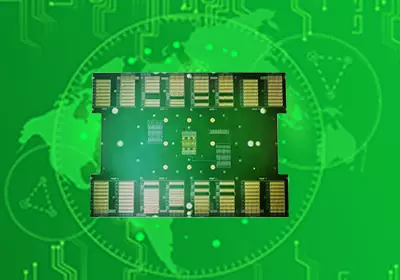
During the development of electronic products, engineers usually go through several stages, including circuit design, functional testing, prototype verification, and final production. In the early development stage, a breadboard is often used for quickly building and testing circuits. Once the design has been verified, the project usually moves to a PCB (Printed Circuit Board) for reliable and mass production.
Although both PCBs and breadboards can be used to connect electronic components and create functional circuits, they are fundamentally different in terms of design concept, manufacturing method, performance, and application.
In simple terms:
A breadboard is ideal for quick experiments and prototype testing.
A PCB is designed for reliable electronic products and large-scale production.
So, what are the key differences between a PCB and a breadboard? And when should engineers choose one over the other? This article will provide a detailed comparison.
What Is a Breadboard?
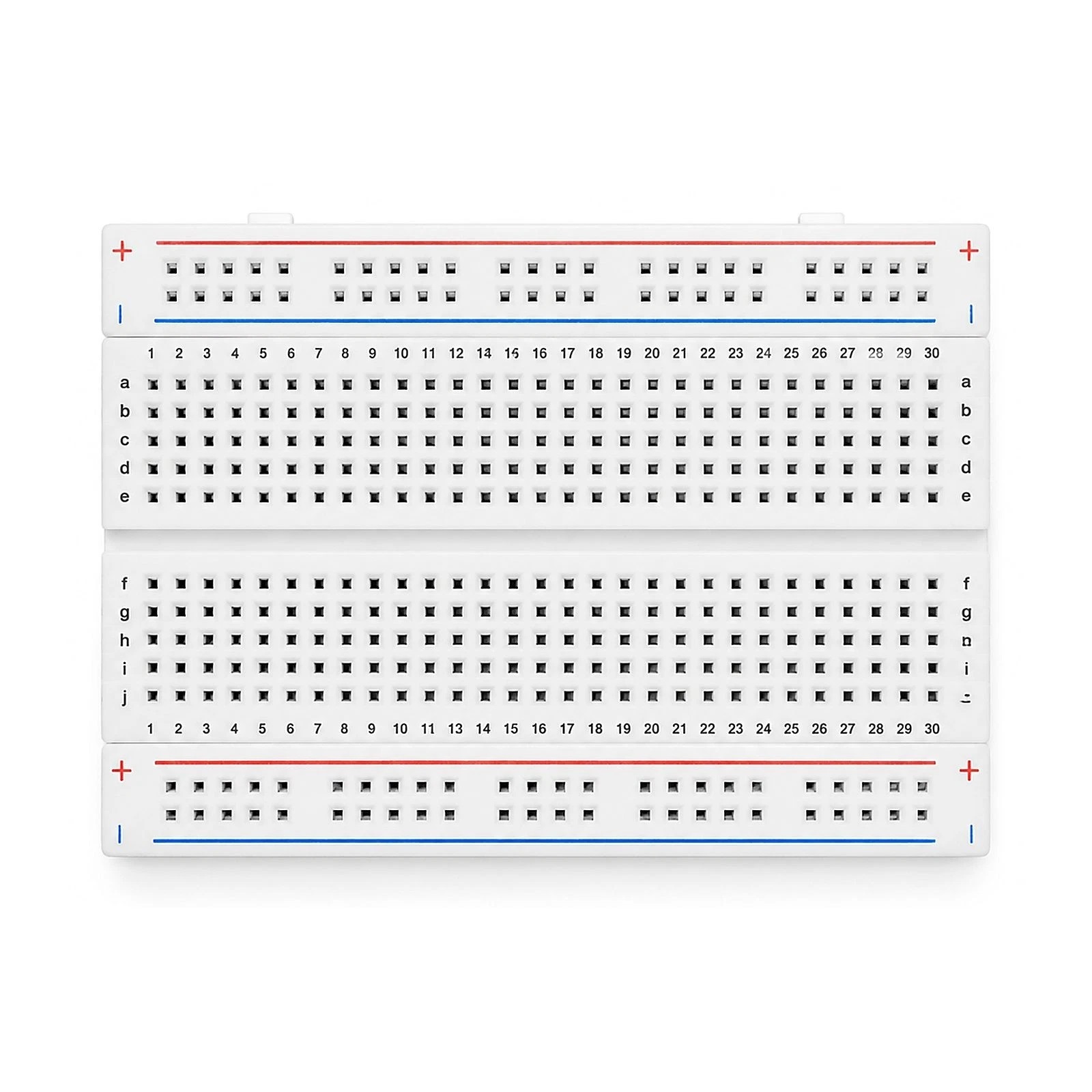
A breadboard is a development tool commonly used for electronic experiments and prototype designs. It allows engineers to build circuits without soldering.
Inside a traditional breadboard, there are multiple rows of metal clips arranged in a specific connection pattern. Engineers can directly insert components such as resistors, capacitors, integrated circuits, and jumper wires into the holes. The internal metal contacts create temporary electrical connections between components.
Because no soldering is required, breadboards are widely used for:
Learning basic electronics;
Testing simple circuit designs;
Quickly verifying circuit functions;
Making adjustments during the early development stage.
For example, when designing an LED control circuit, sensor module, or microcontroller application, engineers can first build the circuit on a breadboard to confirm whether the design concept works as expected.
Advantages of Breadboards
1. Fast Circuit Prototyping
One of the biggest advantages of a breadboard is speed. Engineers can build a simple circuit within minutes without waiting for PCB design and manufacturing.
2. Easy Modification
If changes are needed, components can simply be removed and reinserted. This makes breadboards very convenient during the trial-and-error stage of development.
3. Low Initial Cost
Compared with PCB production, breadboards do not require design, fabrication, or assembly processes, making them a cost-effective solution for early testing.
Limitations of Breadboards
Although breadboards are useful for experiments, they are not suitable as a final solution for electronic products.
1. Limited Connection Reliability
Breadboards rely on mechanical contact between components and internal metal clips rather than permanent soldered connections. Over time, connections may become unstable or loose.
This can be a problem in applications involving:
Vibration;
Temperature changes;
Industrial environments.
For these situations, breadboards usually cannot meet the required reliability standards.
2. Not Suitable for Complex Circuits
As circuit complexity increases, the number of jumper wires on a breadboard also increases, which can lead to:
Messy wiring;
Signal interference;
More difficult troubleshooting.
For high-speed signals, power management circuits, and RF applications, breadboards generally cannot provide the required electrical performance.
3. Cannot Be Used for Mass Production
A breadboard is a testing tool, not a manufacturing solution.
Commercial electronic products require:
Consistent performance;
High reliability;
Compact design;
Production scalability.
These requirements cannot be achieved with breadboard-based circuits.
What Is a PCB (Printed Circuit Board)?
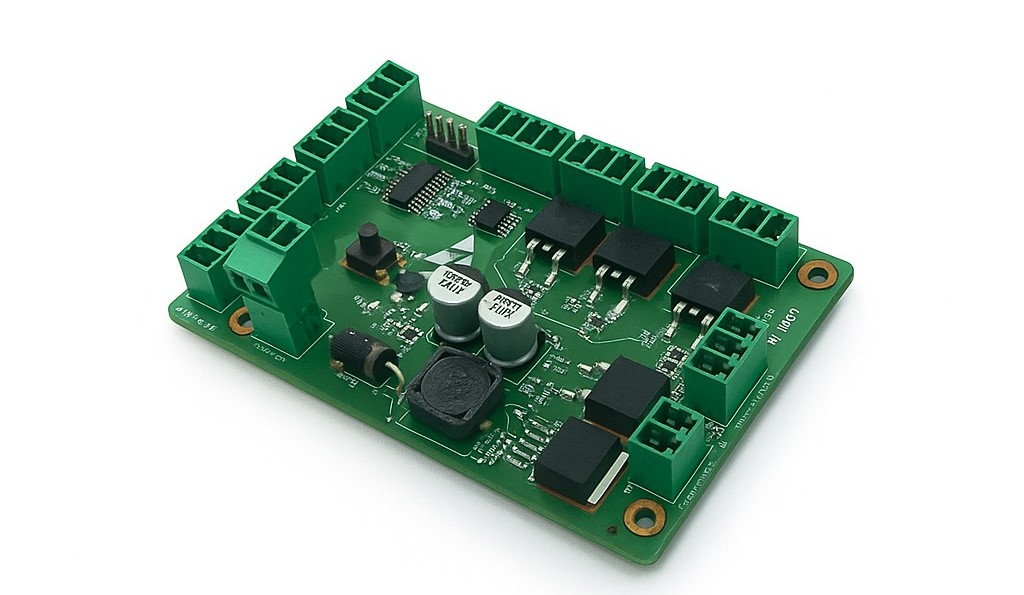
A PCB, or Printed Circuit Board, is an electronic component that uses conductive copper traces formed on an insulating substrate to electrically connect and mechanically support electronic components.
A typical PCB consists of:
Substrate materials (such as FR-4, aluminum, or high-frequency materials);
Copper layers;
Insulation layers;
Solder mask;
Surface finish.
Through professional PCB design and manufacturing processes, complex circuits can be integrated into a compact and reliable board.
Today, PCBs are used in almost every electronic product, including:
Smartphones;
Computers;
Automotive electronics;
Industrial control systems;
Communication equipment;
Medical devices.
Main Advantages of PCBs
1.Higher Reliability
Unlike breadboards, PCB connections are created through copper traces and soldered joints, providing stable electrical performance over long periods.
PCBs can meet the requirements of:
Continuous operation;
High-temperature environments;
Vibration conditions;
Industrial applications.
2. Support for Complex Circuit Designs
PCBs can use multilayer structures to achieve much more complex circuit layouts.
Common PCB structures include:
Single-sided PCBs;
Double-sided PCBs;
Multilayer PCBs;
HDI (High Density Interconnect) PCBs.
For advanced applications, PCBs can also incorporate technologies such as:
Controlled impedance design;
High-frequency materials;
Fine-line routing;
Signal integrity optimization.
These technologies help ensure stable performance in high-speed and high-frequency applications.
3. Suitable for Mass Production
Once a PCB design has been verified, it can be manufactured through standardized production processes.
Compared with manually assembled breadboard circuits, PCBs provide:
Higher consistency;
Lower labor cost;
Better product reliability;
Easier scalability.
Therefore, PCBs are a critical step in transforming an electronic concept into a commercial product.
PCB vs Breadboard: Key Differences
Comparison Breadboard PCB
Main Purpose Prototype testing and experiments Final product manufacturing
Connection Method Mechanical contact Copper traces and soldering
Modification Easy plug-and-play changes Requires design revision
Reliability Limited High
Circuit Complexity Suitable for simple circuits Suitable for complex systems
Signal Performance Limited Can be professionally optimized
Mass Production Not suitable Suitable
Cost Low for early testing Cost-effective for large production
When Should You Use a Breadboard or PCB?
Choose a Breadboard When:
A breadboard is the right choice during the early development stage, such as:
Testing a new circuit concept;
Evaluating component functions;
Learning electronics;
Creating a quick prototype.
It allows engineers to quickly test ideas before investing in PCB design and manufacturing.
Choose a PCB When:
A PCB should be used when the product needs to move toward professional development or production, such as:
Long-term stable operation;
Smaller product size;
Higher reliability;
Mass production.
A typical electronic product development process is:
Design Concept → Breadboard Testing → PCB Prototype → Functional Verification → Mass Production
The breadboard helps engineers validate ideas, while the PCB helps turn those ideas into reliable and manufacturable products.
Conclusion
Breadboards and PCBs are not competing technologies. Instead, they serve different purposes during the electronic product development process.
A breadboard provides flexibility and speed, making it ideal for early experiments and prototype testing. A PCB provides reliability, performance, and production capability, making it essential for modern electronic products.
For engineers and companies looking to transform an electronic concept into a commercial product, PCB technology is a key step toward achieving stable performance, high quality, and successful mass production.