A Trustworthy PCB and Electronic Manufacturing Enterprise! Contact Us


Modern refrigerators are no longer simple cooling appliances. A Refrigerator PCB Board is the control center behind every modern fridge —temperature sensing, compressor control, defrost management, fan operation, user interfaces, connectivity, and energy optimization all depend on reliable electronic control systems. As appliances move toward inverter compressors, multi-zone cooling, and Wi-Fi connectivity, refrigerator PCB design has become far more demanding than the simple relay-driven control boards of a decade ago, and it's an area where design and manufacturing quality directly shape product reliability and warranty cost.
For appliance manufacturers and engineering teams, designing a reliable refrigerator PCB requires more than simply placing components on a circuit board. Electrical performance, thermal conditions, moisture resistance, safety requirements, component selection, and manufacturing processes all need to be considered from the beginning.
What a Refrigerator PCB Board Actually Does
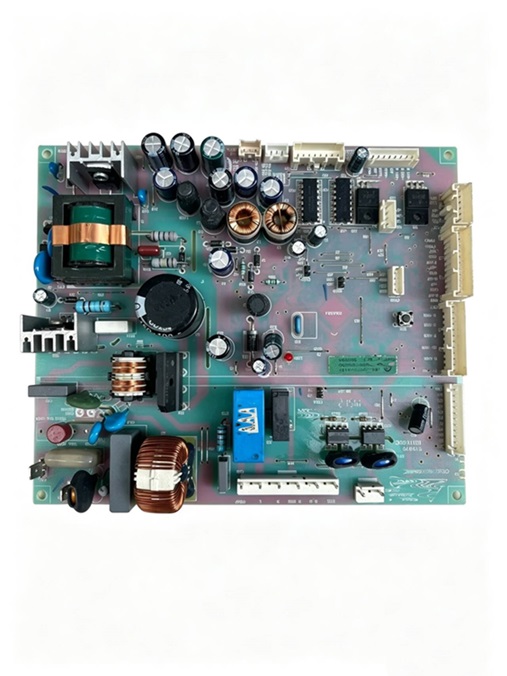
At its core, a refrigerator control board sits between the appliance's sensors and its major electromechanical loads. Thermistors report temperature in the fresh-food and freezer compartments; the board evaluates that data against setpoints and decides when to start or stop the compressor, run the condenser and evaporator fans, trigger a defrost cycle, or activate a heater element. A built-in compressor start-delay logic prevents rapid on/off cycling that would otherwise shorten compressor life. On higher-end models, the same board — or a companion board — also drives the touch panel or display and handles Wi-Fi/Bluetooth connectivity for remote monitoring and smart-home integration.
Because it sits at the intersection of low-voltage sensing and higher-power switching, a refrigerator control board effectively combines two circuit domains — control logic and power drive — on a single, compact assembly, which is where most of the design complexity comes from. Depending on the product architecture, a refrigerator may contain one main control board or several specialized PCBs.
The PCB may also interface with power electronics and sensors operating under different voltage levels. This makes proper circuit architecture and PCB layout particularly important.
Key Design Considerations
Power and signal coexistence. The board typically carries a small-signal section (microcontroller, temperature sensing, communication) alongside a power section driving the compressor, fans, and defrost heater — often through relays or an inverter drive stage. Keeping these sections physically separated, with careful grounding and adequate clearance, prevents switching noise from corrupting sensor readings or causing erratic behavior.
Inverter compressor control. Refrigerators using variable-frequency compressors need a variable-frequency compressor PCB stage capable of driving the compressor motor with precise PWM control, which brings EMI management and layout discipline much closer to what you'd see on an industrial motor-drive board than a simple relay-switched design. This includes tight loop control on the power stage and adequate filtering to keep switching noise from radiating into nearby control circuitry.
Environmental resilience. Unlike many indoor electronics , refrigerator PCBs live in a demanding environment — condensation, humidity swings, and long-term exposure to both cold compartments and warm compressor compartments. Conformal coating, appropriate connector selection, and creepage/clearance distances that account for moisture all matter more here than on a typical dry-environment consumer board. Material selection, solder mask quality, component selection, PCB surface finish, enclosure design, and protective coatings may all contribute to long-term reliability.
Safety compliance. Since the board interfaces directly with mains voltage to drive the compressor and heaters, primary-to-secondary isolation, creepage distance, and clearance must meet UL, IEC, or relevant regional safety standards — the same rigor applied to any mains-connected power PCB.
Long service life. Appliance manufacturers typically expect an 8–15 year service life from a refrigerator control board. That expectation drives component selection (capacitor quality and temperature rating in particular), via and solder joint reliability under thermal cycling, and layout choices that minimize stress on connectors subject to years of vibration from the compressor.
Manufacturing and Sourcing
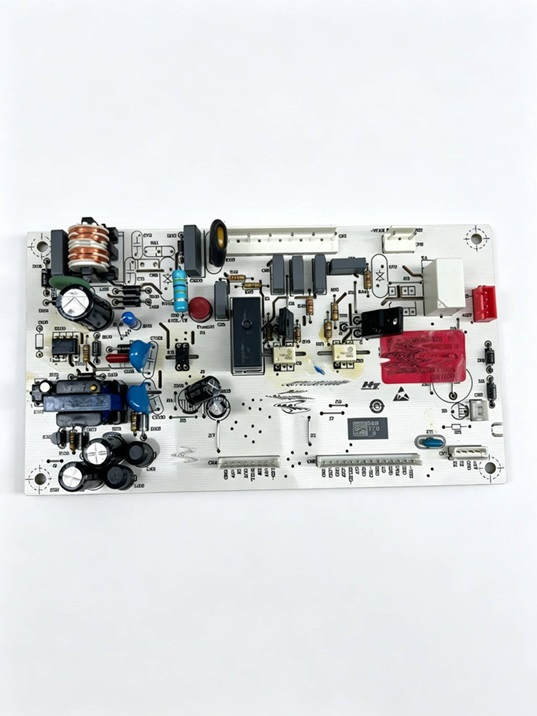
Most appliance brands don't manufacture their own control boards — they define functional and electrical specifications and source from a dedicated refrigerator PCB manufacturer that can handle everything from refrigerator PCB custom OEM design through volume assembly.
The appropriate PCB material depends on the electrical, thermal, mechanical, and environmental requirements of the refrigerator.
For many conventional control applications, FR-4 remains a practical choice because of its balance of cost, electrical performance, mechanical strength, and manufacturing availability.
However, specialized sections may require different considerations. High-temperature environments, power electronics, compact designs, or demanding signal-integrity requirements can influence the choice of laminate, copper thickness, board structure, and surface finish.
A refrigerator PCB must remain reliable throughout repeated temperature cycles, compressor operation, switching events, and long periods of continuous use.
The best design is therefore not simply the smallest or cheapest board. It should balance electrical performance, manufacturability, thermal behavior, reliability, testing requirements, and production cost.
Over the past decade, refrigerator PCB board manufacturer China capability has expanded significantly, and appliance OEMs now have a much broader base of qualified suppliers to choose from — an important factor when weighing lead time, cost, and technical capability together.
When evaluating a manufacturing partner, a few practical questions tend to matter most: Can they support both standard relay-driven boards and higher-complexity inverter/smart refrigerator PCB designs with Wi-Fi and display integration? Do they have documented reliability testing — thermal cycling, humidity, vibration — appropriate for appliance service-life expectations? And can they scale from prototype runs through high-volume production without a drop in consistency?
For manufacturers, working with an experienced Refrigerator PCB Board Manufacturer China like iPCB can also provide access to PCB fabrication, component sourcing, PCBA, engineering review, and production support within one supply chain.
The Refrigerator PCB Board has evolved from a relatively simple control circuit into a critical electronic platform supporting compressor management, temperature sensing, defrost control, power management, user interfaces, and IoT connectivity. A successful refrigerator electronics project requires careful Refrigerator PCB Design, appropriate material and manufacturing choices, reliable assembly, and comprehensive testing.
As refrigerators keep adding intelligence — inverter compressors, multi-zone control, app connectivity — the Refrigerator PCB Board is doing more work than ever, and doing it in one of the more demanding environments a consumer PCB will ever see. Getting the design right, from power/signal isolation to environmental resilience to long-term component reliability, is what separates a control board that lasts the life of the appliance from one that drives warranty claims.