A Trustworthy PCB and Electronic Manufacturing Enterprise! Contact Us


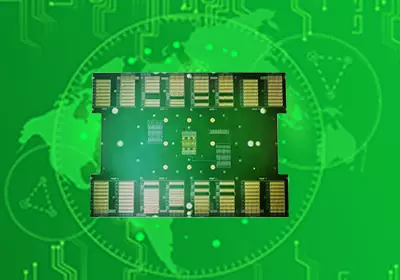
A single layer pcb board is one of the most mature and cost-effective PCB solutions for simple electronic products. With a single conductive copper layer, simple routing, and a streamlined manufacturing process, it remains widely used in consumer electronics, appliances, LED lighting, and power-related products.
Basic Structure and Technical Specs
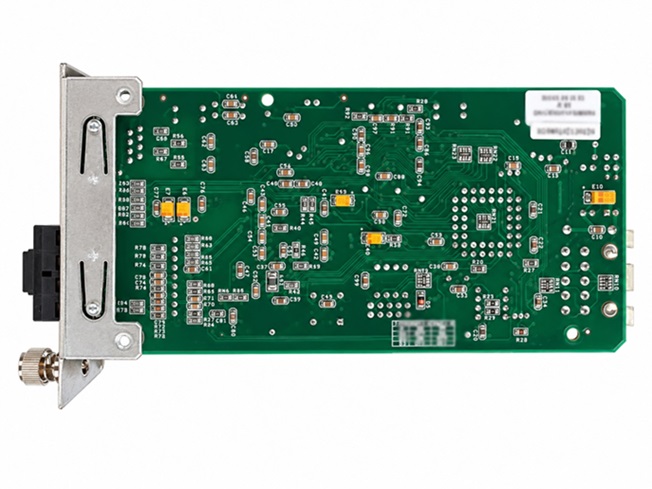
A single layer PCB board has a clear structure: copper foil on one side, epoxy-glass insulating substrate on the other, with wiring on a single side only — no lamination or complex through-hole processing required.
Thickness and mechanical spec: Standard thicknesses run 0.8mm, 1.0mm, 1.2mm, 1.6mm, and 2.0mm, with 1.6mm as the general industry default. Thickness directly relates to insulation spacing, mechanical rigidity, and mounting compatibility — thinner boards suit lightweight, low-load products, while thicker boards suit higher insulation or mechanical stress needs. Non-standard thicknesses require custom production and a feasibility/cost evaluation.
Substrate and compliance: Most single-sided PCB designs use FR-4 flame-retardant substrate, offering stable insulation, heat resistance, and mechanical strength at strong cost-performance. Compliance is table stakes: UL certification for North American markets, RoHS and related environmental standards depending on target market, and traceability of core materials — copper-clad laminate (CCL), copper foil, and prepreg — which is exactly where supplier quality tends to diverge.
Manufacturing Process and Cost Advantages
Single layer PCB manufacturing generally involves fewer production stages than double-sided or multilayer PCB fabrication. Typical processes include circuit imaging, etching, drilling, surface finishing, solder mask application, and electrical inspection.
The simplified structure reduces manufacturing complexity and material consumption. This makes single-sided PCB solutions particularly attractive for high-volume products where cost, consistency, and delivery efficiency are important.
The cost advantage does not simply mean that the board is a lower-quality alternative. Instead, it reflects a better match between product requirements and PCB complexity. When a circuit does not require multilayer routing or high-density interconnection, using a simpler board can avoid unnecessary manufacturing costs.
Technical Boundaries and Design Considerations
The main limitation of a single layer circuit board comes directly from its architecture. Since conductive traces are primarily routed on one side, routing density is limited. Designers have fewer options for crossing traces, separating complex signal paths, or integrating a large number of components into a compact area.
For this reason, single-sided PCB design is generally better suited to circuits with relatively straightforward electrical functions. High-density digital systems, complex power distribution, advanced RF circuits, and highly integrated products may require double-sided, multilayer, HDI, or specialized PCB structures.
However, simplicity can also be an engineering advantage. A less complicated PCB can make manufacturing, inspection, troubleshooting, and supply-chain management easier. The key is not to select the most advanced PCB structure, but to select the structure that meets the actual electrical, mechanical, thermal, and cost requirements of the product.
Market Demand and Applications
Demand drivers: Global demand for single layer PCBs stays large and stable, driven by mature end-product lifecycles (appliances, LED lighting, and basic power supplies have stable technology and slow design iteration), deepening industry specialization (large-scale standardized manufacturing further reduces cost), and continued penetration of basic electronics in emerging markets.
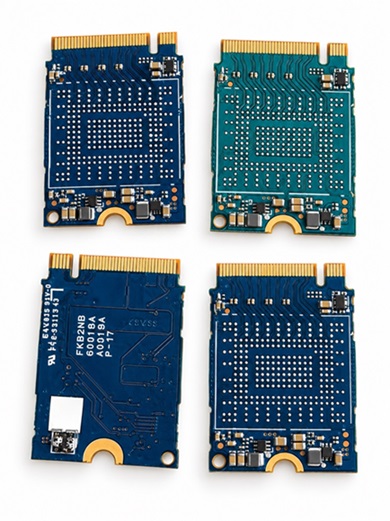
Typical applications: Single layer PCBs concentrate in products with clearly defined circuits, simple structure, high cost sensitivity, and stable lifecycles — LED lighting drivers, home appliance controls (fans, humidifiers, rice cookers), power products (adapters, chargers, low-power switching supplies), and simple consumer electronics like function modules and button boards. These products typically have a 1–3 year lifecycle with mature technology — a strong match for the cost curve of a single layer PCB board, avoiding both over-engineering and premature obsolescence.
Industry Trends
The technology behind single-layer boards is mature, so future development is less about revolutionary structural changes and more about manufacturing efficiency and material optimization.
Environmental requirements continue to encourage the adoption of halogen-free and lower-impact materials. At the same time, improvements in imaging, etching, surface treatment, automated inspection, and production management continue to improve dimensional consistency and manufacturing efficiency.
As electronic products become more cost-sensitive, the value of choosing the simplest PCB structure that satisfies the design requirements becomes increasingly clear. Not every electronic product needs HDI or multilayer technology. For many applications, a well-designed single-layer board remains the more rational engineering solution.
Conclusion
A single layer PCB board isn't a "low-end substitute" — within its intended scope, it's a mature, reliable, cost-optimized, standardized solution backed by stable supply. Its market position rests on a clear technical boundary matched against enormous, sustained end-market demand. As long as simple-function electronics keep proliferating, single layer PCBs will keep holding significant market share on the strength of mature process and cost advantage — and understanding this category's technical profile and boundaries has real, practical value for sourcing decisions and supply chain planning.