A Trustworthy PCB and Electronic Manufacturing Enterprise! Contact Us


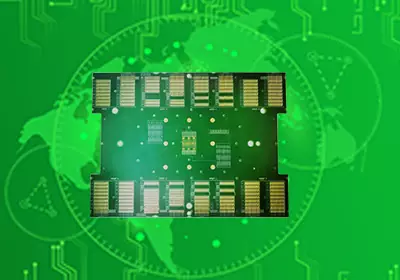
What are printed circuit pins? printed circuit pins are connector components used on circuit boards to facilitate the transmission of power and signals. What is their primary function? In many cases, the input or output terminals of a circuit board require pins or pin headers to allow for easy connection and disconnection. Simply put, one side acts as a plug and the other as a socket; when connected, the circuit is completed. PCB pins are primarily used for external connections, with the number of pins varying based on the number of signal connections required.
Common Types of PCB Pins
As PCB pin technology has evolved, a variety of widely used types have emerged:
Individual Pins: Standalone PCB pins.
Pin Headers (Male Headers): An array of male pins integrated into a molded plastic base.
Female Headers (Socket Headers): Socket-style contacts designed to mate with pin headers.
Jumper Pins: Small connectors used for configuration, testing, or debugging purposes.
Each type supports specific interconnection methods while maintaining a compact footprint.
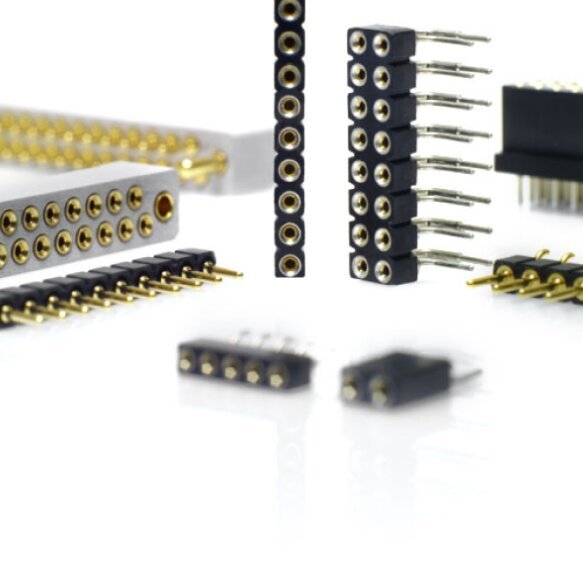
printed circuit pins
How to Use printed circuit pins
1. Select the appropriate PCB pins
Different types of PCB pins have distinct characteristics and applications; choose the right ones based on your specific requirements. Factors such as pin length, diameter, and mating style should be selected according to the actual application.
2. Install the PCB pins
When installing PCB pins, insert them into the corresponding interfaces on the electronic components, ensuring they are oriented correctly. If a pin is difficult to insert, try rotating it slightly or using a different pin.
3. Secure the PCB pins
To ensure stability and reliability, use appropriate tools and methods to secure the pins. Common techniques include soldering or mechanical fastening (such as threaded connections).
Primary Functions of printed circuit pins:
1. Connecting electronic components: PCB pins are used to connect various electronic components—such as integrated circuits, capacitors, and resistors—to a circuit board. Pins establish electrical connections, enabling the transmission of signals and the delivery of power between various components.
2. Connector Interfaces: Pins also serve as components of connectors, designed to be inserted into corresponding sockets to create a secure electrical connection. Such connectors are used to link external devices—such as displays, sensors, or power supplies—thereby facilitating interconnection between systems.
3. Improved Thermal Management: In certain applications, specially designed pins can enhance the heat dissipation of a PCB. By selecting materials with high thermal conductivity and optimizing the pin structure, heat can be efficiently transferred from electronic components to the PCB surface, resulting in superior thermal performance.
4. Mechanical Support and Securing: Pins can function as mechanical supports to secure components. They enhance the mechanical robustness of assemblies, preventing components from shifting or loosening due to vibration or during transport.
5. Versatile Connectivity: The design and arrangement of PCB pins allow for a wide range of functions, including signal transmission, power delivery, and data transfer. By strategically determining the number and layout of the pins, designers can meet the complex connectivity requirements of a circuit board.
6. Ease of Maintenance and Repair: Electronic components connected via pins can be removed and replaced with relative ease, which is highly advantageous for the maintenance and repair of circuit boards. If a component fails, it can be replaced individually without requiring extensive modifications to the entire board.
7. Space and Cost Efficiency: The design flexibility of PCB pins helps save space and simplifies circuit board layout. Furthermore, as standard, widely used components, pins are inexpensive and readily available, which helps reduce overall production costs.
PCB Pins vs. Traditional Connectors
Board-level design typically prioritizes space efficiency and high interconnect density. While traditional connectors are well-suited for many applications, they often consume significant PCB real estate and may limit the total number of contacts.
For instance, common circular connectors or D-sub connectors support a fixed number of contacts—often fewer than the pin count required by many integrated circuits. In contrast, PCB pins can be arranged in dense arrays, supporting dozens or even hundreds of connections within a very small footprint. Mounting large connectors on a circuit board can complicate redesigns or upgrades. PCB pins offer greater flexibility in terms of grouping and layout adjustments, simplifying board modifications and the adaptation to evolving system requirements.
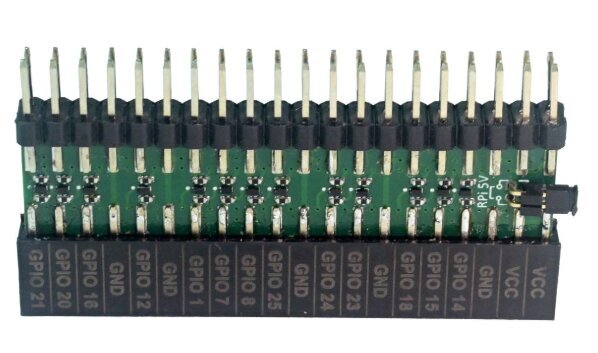
Common Applications for printed circuit pins
PCB pin technology is widely used across various industries and electronic systems, including:
Servers and computing equipment
Medical devices
Test and measurement systems
Telecommunications infrastructure
Consumer electronics
Automotive electronics
Industrial automation
Aerospace and defense platforms
Their versatility makes them suitable for both high-volume commercial products and performance-driven, specialized applications.
In modern electronic devices, pins are used extensively, facilitating connectivity, signal transmission, and maintenance. Understanding the definition, function, and classification of these printed circuit pins enables more effective use of such electronic components in electronic products.