A Trustworthy PCB and Electronic Manufacturing Enterprise! Contact Us


With the widespread adoption of modern residential and commercial air conditioning systems, the Air Conditioning Circuit Board—serving as a vital component of the core control system—plays a critical role; its technical sophistication and reliability directly determine the air conditioner's performance, energy efficiency, and operational lifespan.
What is an Air Conditioning PCB?
The Air Conditioning PCB (Printed Circuit Board) acts as the central control unit within modern air conditioning systems. Its primary function is to coordinate signal transmission and execute control commands among various components, including the compressor, fans, sensors, remote controls, and display modules.
An Air Conditioning PCB typically incorporates the following components:
Microcontroller (the core logic control unit)
Relays (for switching high-voltage loads)
Temperature and humidity sensors
Voltage regulators, capacitors, and filters
Without this circuit board, the air conditioner would be unable to respond to user commands or perform intelligent adjustments.
How the Air Conditioning PCB Works
The PCB receives input commands from a remote control or a wall-mounted thermostat and converts them into control signals to regulate the operation of the following components:
Compressor: Controls the refrigerant circulation cycle.
Fan Motor: Regulates airflow speed.
Four-way Valve: Switches between cooling and heating modes (applicable to combined cooling/heating units).
Display Panel and Fault Indicators.
The PCB also manages power distribution and system on/off sequencing, ensuring that all components operate in coordination and initiate or terminate operations in the correct order.
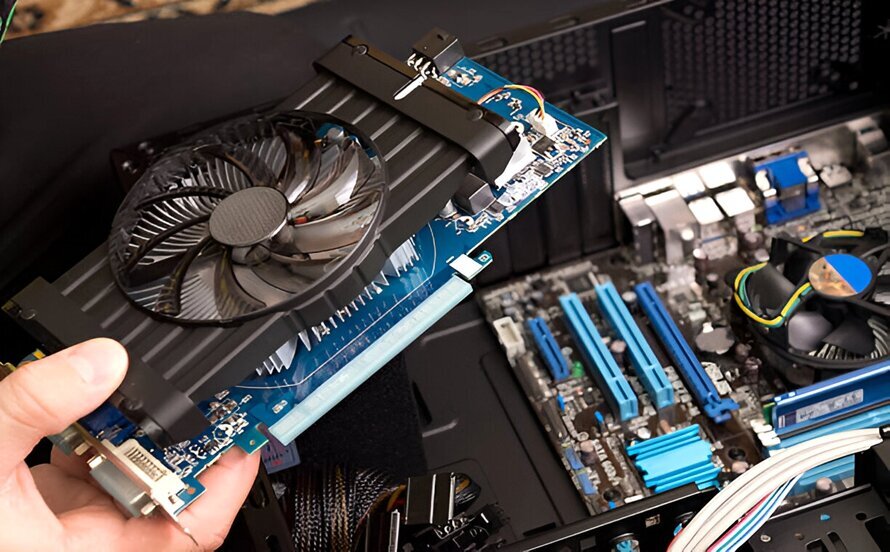
Air Conditioning Circuit Board
Classification of Air Conditioning Circuit Boards
Based on their specific functions and applications, air conditioning circuit boards can be broadly categorized into the following types:
Indoor Unit PCB
Primarily responsible for controlling the indoor fan, fan motor, temperature sensors, and display panel.
Typically integrates signal processing chips and a microcontroller to facilitate indoor temperature monitoring, airflow speed adjustment, and mode switching.
Outdoor Unit PCB
Responsible for controlling the compressor, solenoid valves, outdoor fan motor, and power management.
Must withstand higher ambient temperatures, humidity levels, and electromagnetic interference; consequently, it requires circuit board materials and components with superior heat resistance and anti-interference capabilities.
Display & Interface PCB
Used for the air conditioner's front panel display, button controls, and communication interfaces.
Modern air conditioning units may feature touchscreens or smart connectivity modules, placing high demands on the PCB's wiring precision and resistance to interference.
Power & Inverter PCB
Specifically designed for variable-frequency (inverter) air conditioning systems; it utilizes PWM (Pulse Width Modulation) to control the power output of the compressor and fans, thereby achieving energy-efficient operation. Such boards typically utilize high-power MOSFETs, IGBT devices, and high-frequency copper-clad laminates to withstand high current loads and thermal stress.
Design and Production of Air Conditioning Circuit Boards
The design and production of air conditioning circuit boards constitute a complex systems engineering task, requiring a comprehensive consideration of multiple factors, including electronic design, electromagnetic compatibility (EMC), thermal management, and reliability.
PCB Material Selection
FR4: Commonly used for standard air conditioning circuit boards; offers low cost and excellent mechanical properties.
High-frequency laminates (e.g., PTFE boards): Used for high-frequency control modules; possess superior dielectric properties that minimize signal loss.
Thick copper laminates: Used for power modules to enhance current-carrying capacity and heat dissipation efficiency.
2. PCB Layout and Routing
Power circuits and signal circuits are routed separately to minimize electromagnetic interference (EMI).
Power traces feature widened copper foil designs to increase current-carrying capacity and reduce voltage drop.
High-speed signal paths employ impedance control to ensure communication stability.
3. Component Selection
Core Controllers: Typically utilize high-performance microcontrollers (MCUs) or DSP chips.
Power Management Devices: Must possess high voltage withstand capabilities and low power consumption characteristics.
Critical Sensors and Motor Drivers: Must be selected to ensure stable, long-term operation.
4. Manufacturing Processes and Testing
SMT (Surface Mount Technology): High-precision pick-and-place machines are used for component mounting to ensure the accurate placement of miniature components.
Through-hole Insertion: Used for power components and interface modules.
Wave Soldering / Reflow Soldering: Ensures that component solder joints are firm and reliable.
Functional and Aging Tests: Includes AOI (Automated Optical Inspection), X-ray inspection, and long-term operational aging tests to ensure the PCB is free of defects.
As the core control unit of an air conditioning system, the technical sophistication of the circuit board directly determines the air conditioner's performance, energy efficiency, and service life. With the advancements in 5G, the Internet of Things (IoT), and smart home technologies, air conditioning PCBs are now required to offer not only high reliability and performance but also intelligent and energy-saving capabilities. In the future, high performance, multi-functionality, intelligence, and eco-friendliness will become the dominant trends in the development of air conditioning circuit boards, providing users with a more comfortable, energy-efficient, and intelligent air conditioning experience.