A Trustworthy PCB and Electronic Manufacturing Enterprise! Contact Us


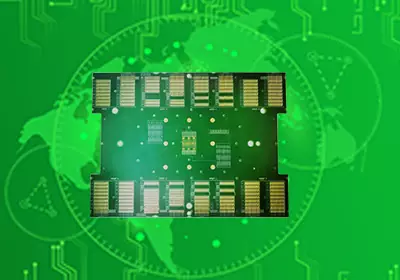
PCB bare board testing is a fundamental process in the printed circuit board (PCB) industry, involving the testing of unpopulated PCBs for short circuits and open circuitsDuring this process, the PCB is inspected for unintended connections between points that should not be connected (known as "shorts") and for missing connections between points that should be connected (known as "opens").
The primary objective of bare board testing is to ensure the quality and functionality of the PCB before components are mounted.
Types of PCB Bare Board Testing
Automated Optical Inspection (AOI):
Automated Optical Inspection (AOI) utilizes high-resolution cameras and image processing software to detect surface defects, such as open circuits, short circuits, and dimensional errors. By comparing the actual layout of the PCB against the design files, it enables rapid and accurate fault detection during the production process.
Flying Probe Testing:
For small-to-medium volume production, flying probe testers are commonly used. These systems employ an XY-drive mechanism to move test probes across the board, bringing them into contact with copper pads. This method offers flexibility and cost-effectiveness for smaller production runs.
Fixed-Fixture Testing:
Fixed-fixture testing (also known as "bed-of-nails" testing) uses a specialized fixture equipped with spring-loaded pins, allowing for the simultaneous testing of multiple points. This approach facilitates high-speed, high-volume testing, making it ideal for large-scale production. However, it requires a significant upfront investment in the design and fabrication of the test fixture.
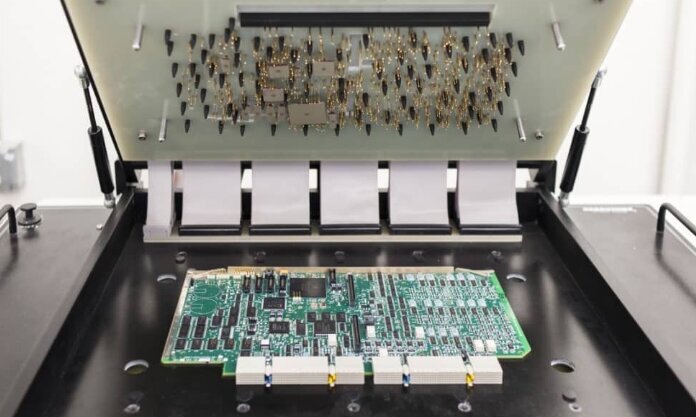
PCB Bare Board Testing
Visual Inspection:
Visual inspection involves carefully examining the PCB—often with the aid of magnification tools—to identify any visible flaws. While this method is an affordable and effective solution for simpler boards, it has limitations regarding precision and reliability, particularly when applied to high-density designs.
Burn-in Testing:
Burn-in testing subjects the PCB to elevated temperatures and voltages over an extended period. This rigorous stress test helps uncover potential early-life failures. Such a process is critical for industries that demand exceptionally high reliability, such as aerospace and medical electronics.
Functional Circuit Testing (FCT):
Functional Circuit Testing (FCT) evaluates the overall functionality of a PCB by simulating its actual operating conditions. This test ensures that the board will perform as expected once it is integrated into the final product. It includes:
Power-on and operational testing.
Signal integrity testing.
Load simulation to verify how the circuit board responds under various conditions.
FCT is critical for high-reliability applications, such as those in the aerospace, automotive, and medical electronics sectors.
Electrical Testing (E-Test):
Electrical testing—also known as continuity and isolation testing—ensures that the electrical pathways on a PCB are intact. It includes:
Continuity testing: Verifying that all intended connections are present.
Isolation testing: Ensuring that no unintended connections (short circuits) exist.
The Importance of PCB Bare Board Testing
1. Early Defect Detection
Detecting open circuits, short circuits, and wiring errors early in the manufacturing cycle reduces repair costs. This prevents defective boards from reaching the assembly stage, where repairs are both more costly and more difficult to perform.
2. Ensuring Design Integrity
This testing confirms that the board’s manufacturing process aligns with the design files created by the PCB designer. It guarantees that the PCB will function as intended within the final custom product or device.
3. Compliance with Standards
Policies and procedures aimed at process improvement must also meet industry and customer requirements. Consequently, this testing helps verify that the manufactured boards adhere to these specifications and will operate reliably in the field.
4. Cost Savings
Identifying and addressing defective bare boards is easier, more economical, and more efficient than dealing with them after components have been assembled. This ultimately boosts profitability by lowering production costs.
Bare board testing is a relatively straightforward process; the following text provides a step-by-step guide on how to conduct it.
PCB bare board testing is one of the initial tests performed on a PCB before it enters full-scale production. By conducting these tests, manufacturers ensure that any potentially defective PCBs do not proceed to the component assembly stage.
Through proper planning, rigorous bare board testing, and process optimization, it is possible to increase yields, reduce costs, and deliver higher-quality products to customers. Standard and Customer-Specified Testing
At iPCB, we adhere to rigorous quality control protocols, subjecting all PCBs to 100% electrical testing to ensure that any defects are eliminated prior to shipment. Our standard PCB bare board testing procedures include:
Visual Inspection
Automated Optical Inspection (AOI)
Electrical Testing (E-Test)
For clients with specific requirements, we offer additional testing options upon request, such as:
Burn-in Testing – for high-reliability applications.
X-ray Inspection – for BGAs and hidden solder joints.
Thermal Stress Testing – for extreme environmental conditions.
We work closely with our clients to provide customized PCB bare board testing solutions tailored to the performance and reliability requirements of their products.